Can You Live in a Villa? Real Life on the Other Side of Luxury

Villa Ownership Cost Calculator
Your Villa Details
Additional Features
People see villas in magazines, on Instagram, or in movies-and wonder: Can you live in a villa? Not just visit. Not just rent for a week. But actually live there, day after day, year after year. The answer isn’t yes or no. It’s complicated. And it depends on more than just the size of the pool or the view from the balcony.
What a Villa Really Is (Not What You Think)
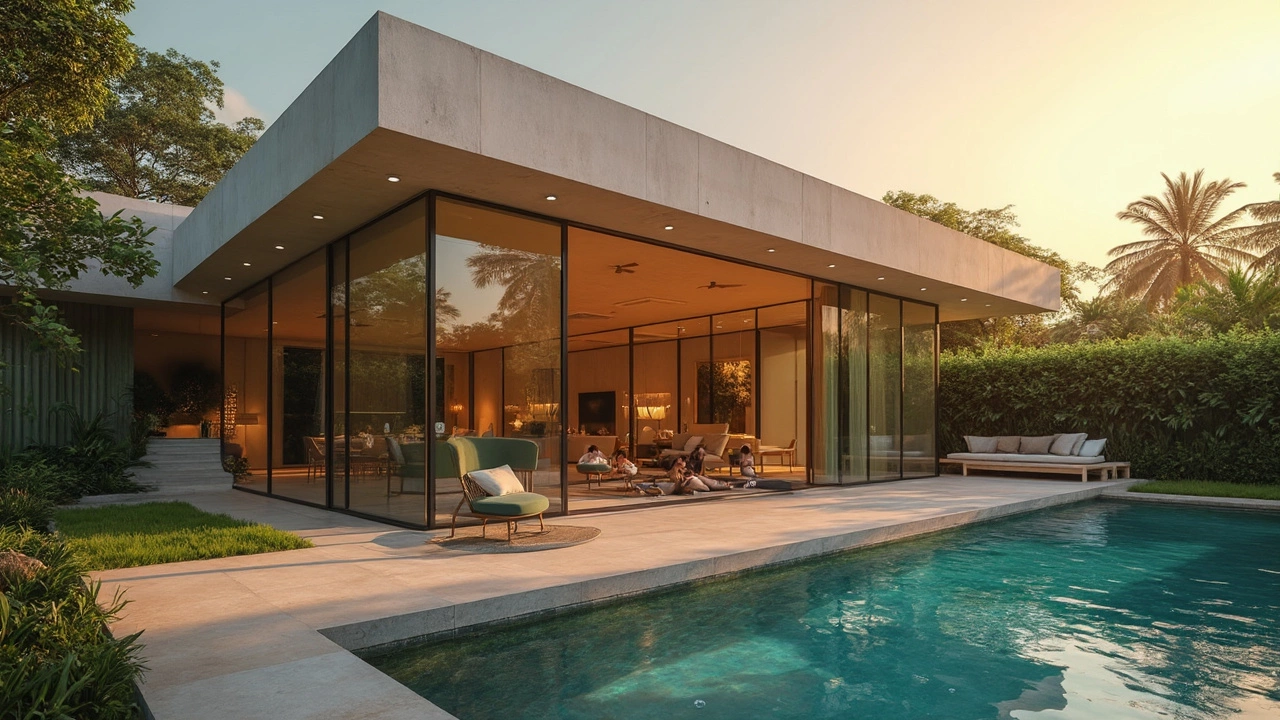
A villa isn’t just a big house with a fancy name. In places like Italy, Spain, or even parts of Southeast Asia, a villa historically meant a country estate-often self-sufficient, with farmland, olive trees, or vineyards. Today, when you see "villa" listed for sale in Auckland, Bali, or Miami, it usually means a standalone luxury home with private land, a pool, and high-end finishes. But here’s the catch: the bigger the villa, the more it demands from you.
Think about it. A standard 4-bedroom house might need a lawn mowed once a week. A 7,000-square-foot villa with 3 acres of landscaping? That’s not a weekend chore. That’s a full-time job. You’ll need gardeners, pool cleaners, security staff, and maybe even a property manager if you’re not there every day. One homeowner in the hills of Auckland told me his villa’s monthly maintenance bill was $2,800-just for upkeep. Not including utilities, insurance, or taxes.
The Hidden Costs You Won’t See in the Brochure
Real estate listings show perfect lighting, staged furniture, and infinity pools. They don’t show the cracked tile in the guest bathroom that needs replacing. Or the fact that your villa’s heating system runs on propane, and the tank has to be refilled every 3 weeks. Or that the smart home system glitches every time it rains.
Here’s what most people don’t budget for:
- Security: Villas are isolated. Many need 24/7 surveillance, gated entry, or even private guards. In some regions, this adds $1,500-$3,000 a month.
- Utilities: Larger homes use more power, water, and gas. A villa with multiple pools, outdoor kitchens, and climate-controlled rooms can use 3-5 times more energy than a regular house.
- Insurance: High-value homes cost more to insure. In New Zealand, villa insurance can run $8,000-$15,000 a year, depending on location and materials.
- Repairs: Custom finishes-natural stone, imported wood, hand-painted ceilings-aren’t covered by standard contractors. You need specialists. And they’re expensive.
One buyer in Tuscany bought a 19th-century villa for €1.2 million. Two years later, they’d spent another €400,000 on structural repairs, drainage fixes, and restoring original tiles. No one warned them. The listing just said "charming rustic charm."
Isolation Isn’t Just Physical
Luxury homes are often built far from town centers-for privacy, views, quiet. But that quiet comes at a price. You’re not just far from shops. You’re far from doctors, schools, public transport, and even neighbors who might notice if something’s wrong.
One family in Bali moved into a villa with a 10-acre garden and ocean views. They loved it-until their 8-year-old needed emergency surgery. The nearest hospital was 45 minutes away by dirt road. They had to charter a private ambulance. The bill? $12,000. And that was just the transport.
For retirees, this isolation can be dangerous. For young families, it’s lonely. You can’t just walk to the grocery store. You can’t drop the kids at school. You can’t pop into a café for coffee with a friend. You have to plan everything. And that planning becomes exhausting.

Who Actually Lives in Villas Full-Time?
It’s not the people you think.
You won’t find many young professionals living full-time in villas. Too expensive. Too much upkeep. Too far from work. You won’t find many remote workers either-unless they’re making six figures and have a team to manage their home.
The people who live in villas year-round usually fall into three groups:
- Retirees with deep savings: They’ve sold their city homes, moved abroad, and have enough passive income to cover staff and repairs. They don’t mind the slow pace.
- Business owners with remote teams: CEOs, investors, or founders who use the villa as a retreat or base. They hire managers to run operations and staff.
- Second-home owners who rent it out: Most villas aren’t lived in full-time. They’re rented out for 6-9 months a year. The owner lives there only during holidays. That’s how they pay for it.
If you’re not one of these people, living in a villa full-time is like owning a Ferrari and driving it once a month. You’re paying for performance you don’t use.
What’s It Really Like Day to Day?
Let’s say you bought a villa in New Zealand’s Waikato region. Here’s what a typical week looks like:
- Monday: The gardener trims the hedges. The pool cleaner checks the pH levels. You get a text that the solar panels are underperforming.
- Tuesday: You drive 40 minutes to the nearest supermarket. You realize you forgot milk. Again.
- Wednesday: The HVAC system breaks. You wait 3 days for a technician who flies in from Auckland.
- Thursday: You host a dinner party. You spent $300 on wine. The guests loved it. But you’re tired.
- Friday: You get an email from your property manager. The roof has a leak. Repairs will cost $18,000. Insurance won’t cover it-because it’s "wear and tear."
- Saturday: You nap. You stare at the ocean. You wonder if this was worth it.
- Sunday: You scroll through Instagram. Someone else’s villa looks perfect. Yours feels heavy.
This isn’t glamorous. It’s exhausting. And it’s real.

When a Villa Makes Sense
There are times when a villa isn’t just a status symbol-it’s the right choice.
- You work remotely and need quiet space to focus.
- You have elderly parents who need a private, accessible home with medical support nearby.
- You’re building a business and need a retreat for clients or team offsites.
- You’ve lived in apartments or condos for decades and crave space, privacy, and land.
One couple in Tauranga bought a 1980s villa on 2 acres. They turned the old barn into a home office. They planted a vegetable garden. They host monthly potlucks for neighbors. They don’t have a pool. They don’t need one. Their villa works because they adapted it-not because they chased a dream.
Before You Buy: Ask These 5 Questions
If you’re seriously considering a villa, don’t just look at the photos. Ask:
- How much will maintenance cost each month? Get quotes from local landscapers, pool services, and security firms. Don’t guess.
- How far is the nearest hospital, school, and grocery store? Drive there. At 7 a.m. On a rainy day. See how long it takes.
- Can I afford to leave it empty? If you travel often, will you pay for staff to watch over it? Or will it sit unused and deteriorate?
- What’s the insurance really cover? Ask for a copy of the policy. Look for exclusions: "earth movement," "aging plumbing," "custom finishes."
- Am I buying a home-or a liability? A villa isn’t an asset if it drains your time, money, and peace.
Final Thought: The Dream Isn’t the House
You don’t live in a villa to show off. You live there because it gives you something you can’t find anywhere else: space, quiet, control.
But if you’re chasing a fantasy of luxury, you’ll end up stressed, broke, and alone. The real luxury isn’t the marble countertops or the infinity pool. It’s waking up without worrying about repairs, bills, or isolation.
Ask yourself: Do I want a villa-or do I just want freedom?
Can you live in a villa full-time without a staff?
It’s possible, but only if the villa is modest in size and located in a region with low maintenance demands. In places like New Zealand or parts of Europe, a 4- to 5-bedroom villa with a small garden and standard systems can be managed by the owner-especially if you’re handy and have time. But anything larger than 5,000 sq ft with pools, extensive landscaping, or custom features almost always requires hired help. Without staff, you’ll spend your weekends cleaning, fixing, and worrying-not relaxing.
Are villas a good investment?
Villas are rarely good investments in the traditional sense. They don’t appreciate faster than standard homes. In fact, they often sell slower and cost more to maintain. Their value comes from personal use-not resale. If you plan to rent it out part-time, you might break even. But if you’re buying it as a primary home, think of it as a lifestyle expense, not an asset. In markets like Auckland or Bali, villas can lose value if they’re poorly maintained or overpriced for their location.
What’s the difference between a villa and a mansion?
A villa is typically a standalone luxury home with land, often in a rural or semi-rural setting. It’s designed for comfort and privacy, with features like pools, gardens, and outdoor living areas. A mansion is defined by size-usually over 8,000 sq ft-and often located in urban or suburban areas. Mansions prioritize grandeur: ballrooms, elevators, multiple kitchens. Villas prioritize lifestyle. Mansions are about impressing guests. Villas are about living well.
Do villas have property taxes?
Yes. In most countries, villas are taxed as high-value residential property. In New Zealand, they fall under the same rating system as other homes, but because they’re larger and on more land, their rates are higher. In the U.S., property taxes vary by state but can be 1-3% of the home’s value annually. In Europe, some countries charge wealth taxes on luxury homes. Always check local rules before buying.
Is it cheaper to build a villa or buy one?
It’s almost always cheaper to buy an existing villa than to build one from scratch. Building a custom villa involves permits, design fees, labor, materials, delays, and unexpected costs. In New Zealand, building a luxury home can cost $4,000-$6,000 per square meter. A comparable existing villa might sell for $2,500-$3,500 per square meter. Plus, existing villas often come with mature landscaping and established infrastructure-things you can’t replicate without years and tens of thousands in extra costs.
Before you sign anything, ask yourself: Am I ready for this? Not the dream. The reality.