Do You Have to Make 3X Rent in New York? The Real Income Rule Explained

NYC 3x Rent Calculator
Calculate Your Income Requirement
Enter your monthly rent to see what income you'd need for standard NYC rentals
Alternative Options
If you don't meet the standard requirement, here's how to qualify:
Guarantor
Someone with 8x your monthly rent (e.g., $24,000 for $3,000 rent) can cover payments. Must be a U.S. resident with good credit.
Upfront Payment
Pay 3-6 months of rent in advance. This eliminates income verification needs.
Rental Insurance
Services like Insurent or Leap offer coverage for missed payments (70-100% of monthly rent fee).
Key Insight
Many landlords accept alternatives to the 3x rule. Check listings for "flexible income requirements" or ask about guarantor services.
When you see a listing for a one-bedroom apartment in Brooklyn or a studio in Manhattan, the first thing you notice isn’t the view or the hardwood floors-it’s the rent. Then you scroll down and find the fine print: “Income must be 3x the monthly rent.” It feels like a wall. Is this real? Is it legal? And more importantly-can you actually meet it?
Where did the 3x rent rule come from?
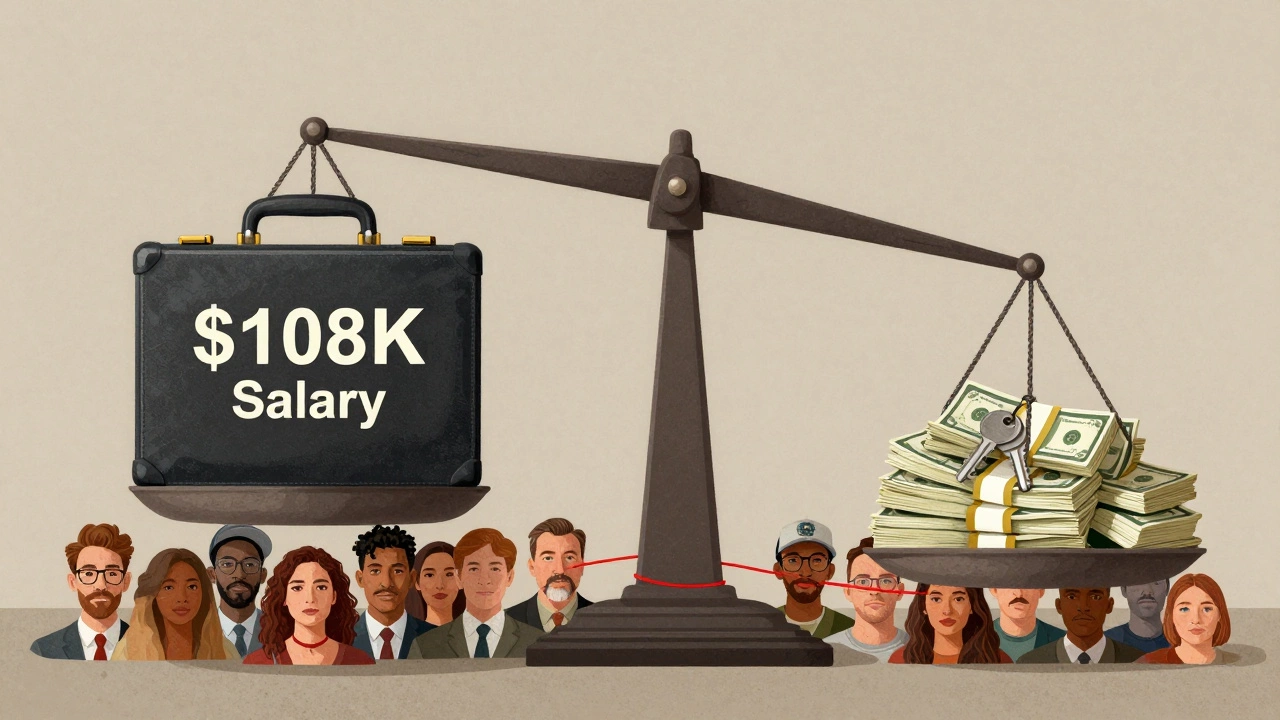
The 3x rent rule isn’t a law. It’s not written in New York City housing codes. It’s a standard set by landlords and property management companies to reduce risk. They want to be sure you won’t miss a payment. If your rent is $3,000, they want you making at least $9,000 a month before taxes. That’s $108,000 a year. For a single person? That’s a lot.
This rule became popular in the 1990s when rental markets in big cities got competitive. Landlords started using it as a quick filter. It’s easy to check on an application. No need to dig into bank statements or job history-just multiply the rent by three. Over time, it became the default, even though many people don’t actually earn that much.
Is the 3x rent rule still common in 2025?
Yes. In 2025, the 3x rent rule is still the norm in Manhattan, Brooklyn, Queens, and most of the outer boroughs. Major landlords like RXR, SL Green, and even smaller building owners stick to it. Online platforms like StreetEasy and Zillow often list it as a requirement. Even some co-ops and condos enforce it.
But here’s the twist: not everyone follows it. Smaller landlords, especially those renting out single-family homes or basement units, are more flexible. Some will accept 2.5x rent if you have a strong credit score, a steady job, or a guarantor. Others might look at your savings-if you have six months of rent in the bank, they might waive the income rule entirely.
Who actually makes 3x the rent in New York?
Let’s break it down with real numbers. The median rent for a one-bedroom in NYC is $3,400 as of late 2025. That means you’d need to make $102,000 a year before taxes to qualify under the 3x rule.
- A starting teacher in NYC makes about $58,000-well below the threshold.
- A nurse at a Manhattan hospital earns around $85,000-still short.
- A software engineer at a mid-sized tech firm? $110,000-$130,000. That’s where you start to qualify.
- A freelance designer or gig worker? Unless they have multiple clients and consistent income, they’re often turned down.
So the 3x rule doesn’t just screen for affordability-it screens for job type. It favors corporate, salaried, or tech-sector workers. It leaves out teachers, artists, social workers, and many service industry employees-even if they’ve lived in the city for years and pay rent on time.
What if you don’t make 3x rent? Can you still rent?
You can. But you need a workaround. Here are the most common and effective options:
- Use a guarantor. This is someone-usually a parent or close relative-who agrees to pay your rent if you can’t. They need to make 8x the monthly rent and pass a credit check. Many landlords accept this, especially if the guarantor lives in the U.S. and has a strong income.
- Pay more upfront. Some landlords will let you pay 3-6 months of rent in advance. This removes their risk. You’re not proving income-you’re proving you have cash.
- Use a rental guarantor service. Companies like Insurent, The Guarantors, or Leap offer insurance that covers rent if you default. For a one-time fee (usually 70-100% of one month’s rent), you can bypass the income rule. These services are growing fast and are now accepted by over 60% of NYC rental agencies.
- Look for rent-stabilized or income-restricted units. These apartments have different rules. You don’t need to make 3x rent-you need to meet income caps. For example, a studio in a 421-a program might require you to earn under $60,000. They’re harder to find, but they exist.
Why does the 3x rule hurt renters more than it helps landlords?
Landlords think the 3x rule keeps them safe. But it doesn’t. A person making $95,000 who spends 40% of their income on rent is just as likely to miss a payment as someone making $120,000 who spends 25%. What really matters is financial stability, not gross income.
Studies from the NYC Housing Authority show that renters who pay more than 50% of their income toward rent are more likely to fall behind-not because they’re irresponsible, but because they’re squeezed by food, healthcare, and transportation costs. The 3x rule ignores that. It’s a blunt tool.
And here’s the irony: many landlords end up with vacancies because they reject qualified applicants who just don’t hit the magic number. In 2024, over 12,000 rental applications in NYC were denied solely because of the 3x rule-even though the applicants had perfect credit and a 10-year rental history.
What’s changing in 2025?
Pressure is building to change the rule. In 2024, New York City passed a law requiring landlords to disclose if they accept guarantor services. In early 2025, a state bill was introduced to cap income requirements at 2.5x rent for apartments under $3,500/month. It hasn’t passed yet-but more landlords are testing alternatives.
Some property managers now use AI tools that analyze bank statements, job history, and payment patterns instead of just income. Others use rental scoring systems that look at credit, employment length, and references. These methods are more accurate-and more fair.
What should you do if you’re trying to rent in NYC?
Don’t assume you’re out of luck just because you don’t make 3x rent. Here’s a practical checklist:
- Check your credit score. Aim for 680 or higher.
- Save at least 2-3 months of rent as a buffer.
- Ask if the landlord accepts guarantor services. Most do now.
- Look for listings that say “flexible income requirements” or “guarantor accepted.”
- Consider outer boroughs like Queens or the Bronx-rents are lower, and landlords are more willing to negotiate.
- Apply to rent-stabilized units through NYC’s Housing Connect portal.
And if you’re rejected? Don’t give up. Ask why. Sometimes it’s just a formality. Offer to pay extra upfront. Provide a letter from your employer. Show your bank history. Landlords aren’t robots-they’re people who want reliable tenants.
Final thought: The rule is broken. But you’re not.
The 3x rent rule was never meant to be a barrier to housing. It was a shortcut. But in 2025, it’s become a gatekeeper for who gets to live in New York. It favors the wealthy and excludes the working class-even those who’ve been paying rent on time for a decade.
You don’t need to make $100,000 to be a good tenant. You just need to be responsible, honest, and prepared. There are ways in. You just have to know where to look-and how to ask.
Do I really need to make 3 times the rent in New York?
No, it’s not a legal requirement-it’s a landlord policy. Many landlords still use it, but alternatives like guarantors, upfront payments, or rental insurance are widely accepted. Some smaller landlords may accept 2.5x rent if you have strong credit or savings.
What if I’m self-employed or freelance?
You’ll need to show two years of tax returns and consistent income. Some landlords will average your last two years’ earnings. Others may require a guarantor or a rental insurance policy. Services like Insurent or Leap are designed for freelancers and can help you qualify.
Can I use a friend as a guarantor?
Most landlords require the guarantor to be a close family member-parent, sibling, or spouse. Friends rarely qualify unless they live in the U.S., have a U.S. credit history, and meet the income requirement (usually 8x the rent). Some rental insurance services can replace the need for a personal guarantor.
Are there apartments in NYC that don’t require 3x rent?
Yes. Rent-stabilized units, income-restricted housing, and some co-living spaces don’t use the 3x rule. Also, smaller landlords, especially those renting basements or garden apartments, often negotiate. Look for listings that say “flexible income” or “guarantor accepted.”
How much should I save before renting in NYC?
You’ll need at least one month’s rent for the security deposit, plus first and last month’s rent-so 3x the monthly rent upfront. That’s $10,000+ for a $3,300 apartment. If you’re using a guarantor or rental insurance, you might only need the first month’s rent and a broker’s fee (if applicable). Always budget for moving costs and utilities too.
If you’re struggling to find a place, don’t wait for the perfect apartment. Start applying to 5-10 listings at once. Landlords move fast in NYC. The right one might not be the one with the best view-it’s the one that lets you in.