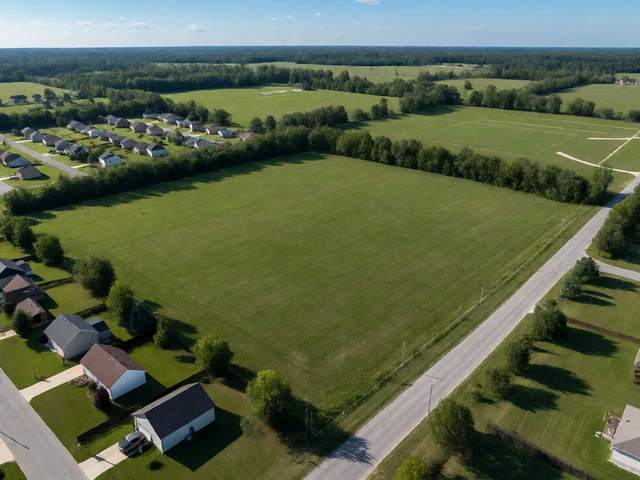
What Size Is 5 Acres? Visualizing Land for Your Next Property
Land Size Visualizer
Enter a land size to see how it compares to familiar objects like American football fields and suburban house lots.
217,800
Sq Ft20,234
Sq Meters2.02
HectaresYou’re scrolling through property listings, and you see a plot described as "5 acres." It sounds substantial, but what does that actually look like on the ground? Is it big enough for a hobby farm? Too small for serious cattle grazing? Or just right for a large estate with room to breathe? The number "5" is abstract. We need to translate it into something your brain can picture.
Here is the short answer: 5 acres is roughly equivalent to 3.7 American football fields (including end zones) or about 20,000 square meters. If you were walking around its perimeter at a normal pace, it would take you about 15-20 minutes. But knowing the math isn’t enough. You need to feel the scale to know if this land fits your life.
The Math Behind the Acre
Before we visualize, let’s clear up the numbers. An acre is a unit of area used primarily in the United States, Canada, and the United Kingdom, though it has historical roots elsewhere. In New Zealand and many other countries, we use hectares. This conversion trips people up constantly.
One acre equals exactly 4,046.86 square meters. Therefore, 5 acres equals 20,234.3 square meters. For those who think in feet, one acre is 43,560 square feet. So, 5 acres is 217,800 square feet.
| Unit | Value |
|---|---|
| Square Meters | 20,234 m² |
| Hectares | 2.02 ha |
| Square Feet | 217,800 sq ft |
| Football Fields (NFL) | ~3.7 fields |
| Standard Soccer Pitch | ~2.8 pitches |
If you are looking at land in Auckland or Wellington, you’ll likely see hectares listed alongside acres. Remember that 1 hectare is bigger than 1 acre. Specifically, 1 hectare is 2.47 acres. So, when you see "2 hectares," don’t assume it’s similar to 2 acres-it’s nearly double the size.
Visualizing 5 Acres in Real Life
Abstract numbers don’t help you decide if you want to buy the land. Let’s make it real using things you already know.
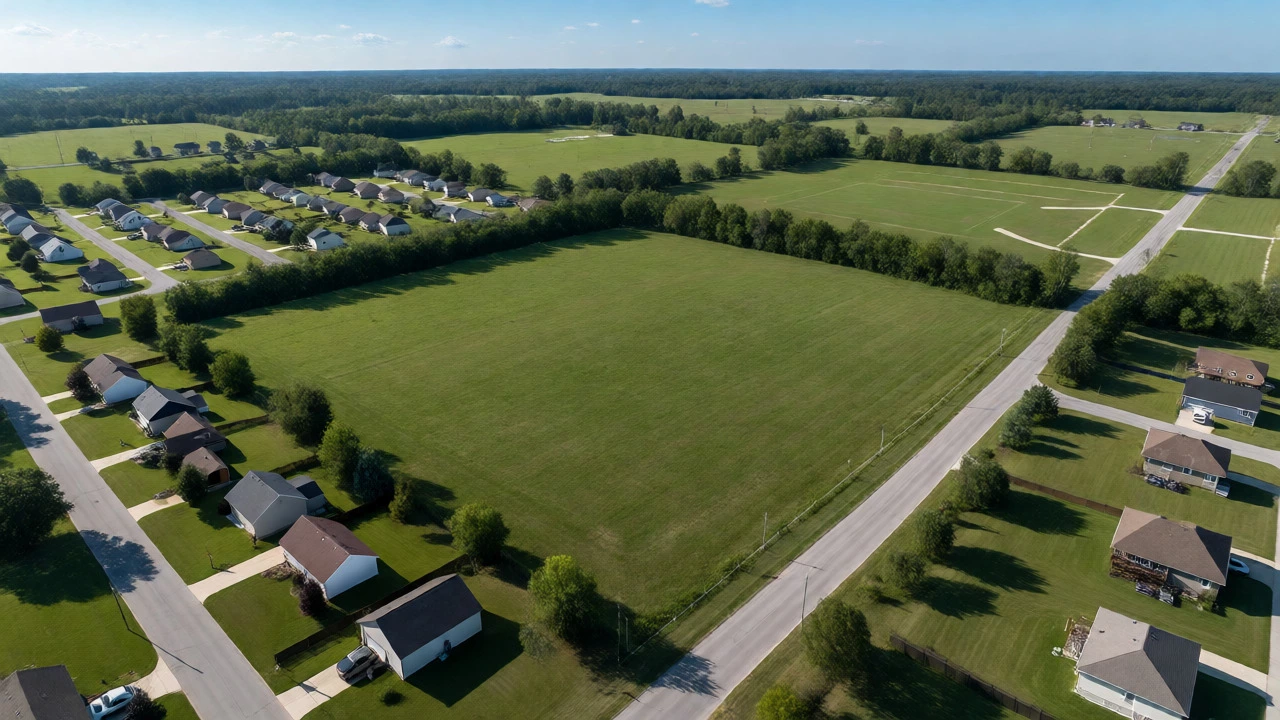
American Football Field is a common reference point. A standard NFL field is 1.32 acres. If you lined up three full fields plus two-thirds of another, you’d have 5 acres. Imagine driving down a long driveway where the grass stretches out on both sides. That stretch needs to be significant to cover that area.
How about something more relatable to daily life? Consider the average suburban house lot. In many US suburbs, a typical home sits on a 0.25-acre lot. That means 5 acres could fit 20 of these houses side-by-side, assuming no streets or setbacks. In New Zealand, residential sections vary wildly, from tiny urban plots to larger lifestyle blocks. A "lifestyle block" often starts around 1-2 acres. So, 5 acres gives you plenty of room for a main house, a guest cottage, a workshop, and still have space left over.
Try this mental exercise: Stand in the middle of a 5-acre square plot. If the plot is perfectly square, each side is about 142 meters (466 feet) long. Walk 71 meters from the center to any edge. That’s longer than a soccer pitch half-length. You won’t feel cramped, but you also won’t feel lost in the wilderness. It’s manageable. You can walk the entire perimeter in under 20 minutes without breaking a sweat.
What Can You Actually Do With 5 Acres?
This is the question every buyer asks. Is it too small to be useful? Too big to maintain easily? The truth is, 5 acres is the sweet spot for many uses. It’s large enough to offer privacy and utility, but small enough to manage without hiring a full-time crew.
Hobby Farming and Gardens
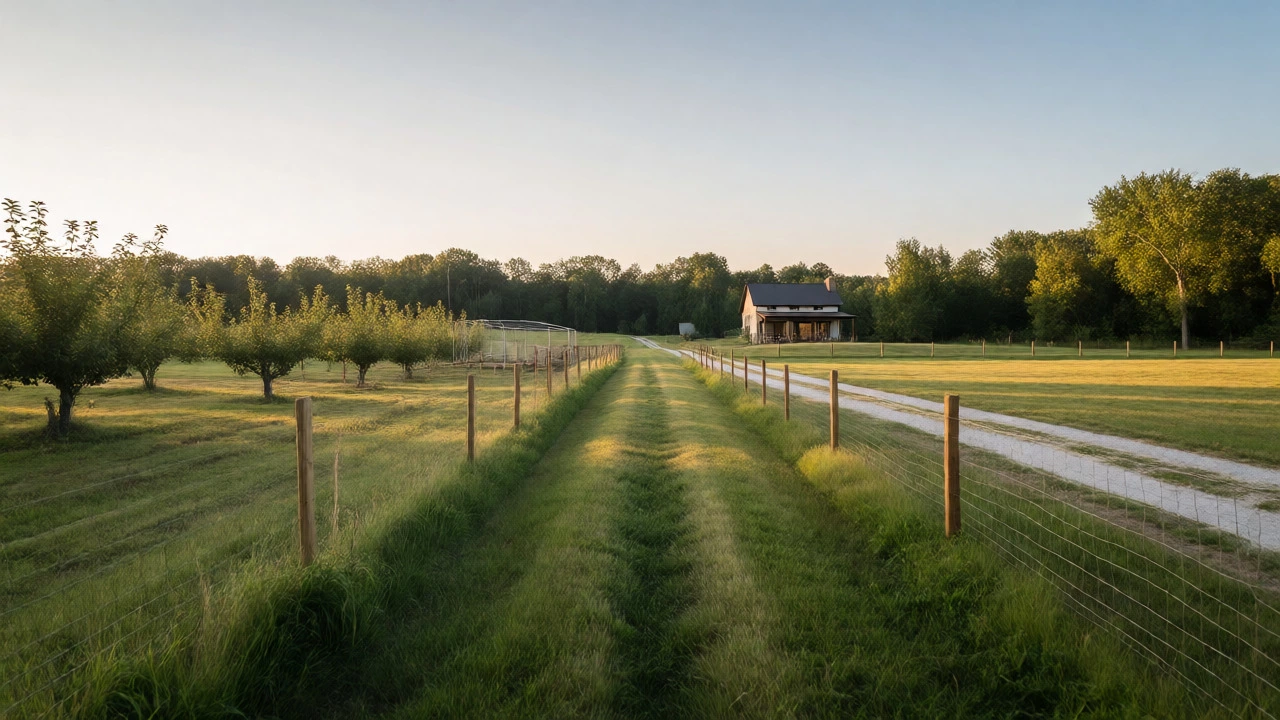
You cannot run a commercial dairy farm on 5 acres. You need dozens of acres for that. But for a hobby farm? It’s perfect. You can keep a few chickens, maybe two or three goats, and perhaps a couple of sheep. You won’t be feeding them entirely from the land unless you practice intensive rotational grazing, which requires careful management. However, you can grow a massive vegetable garden, an orchard with apple, pear, and plum trees, and even some berry bushes.
In New Zealand, zoning laws matter here. Check if your local council allows livestock on residential-zoned land. Some areas restrict animals by weight or type. Even if you can’t keep cows, 5 acres provides ample space for composting systems and rainwater harvesting tanks, which are essential for self-sufficiency.
Building and Privacy
Privacy is a major reason people move away from cities. On a 0.5-acre lot, your neighbor might hear your lawnmower. On 5 acres, you can set your house back significantly from the road. You can plant a windbreak of native trees-like Totara or Manuka in NZ-to shield yourself from wind and prying eyes. You could build a detached garage, a studio, or a barn without crowding the main residence.
Consider the topography. Five acres on flat land feels different than five acres on a steep hillside. Steep slopes reduce usable flat area for building but increase views and drainage issues. Always check the slope percentage before falling in love with the view.
Recreation and Storage
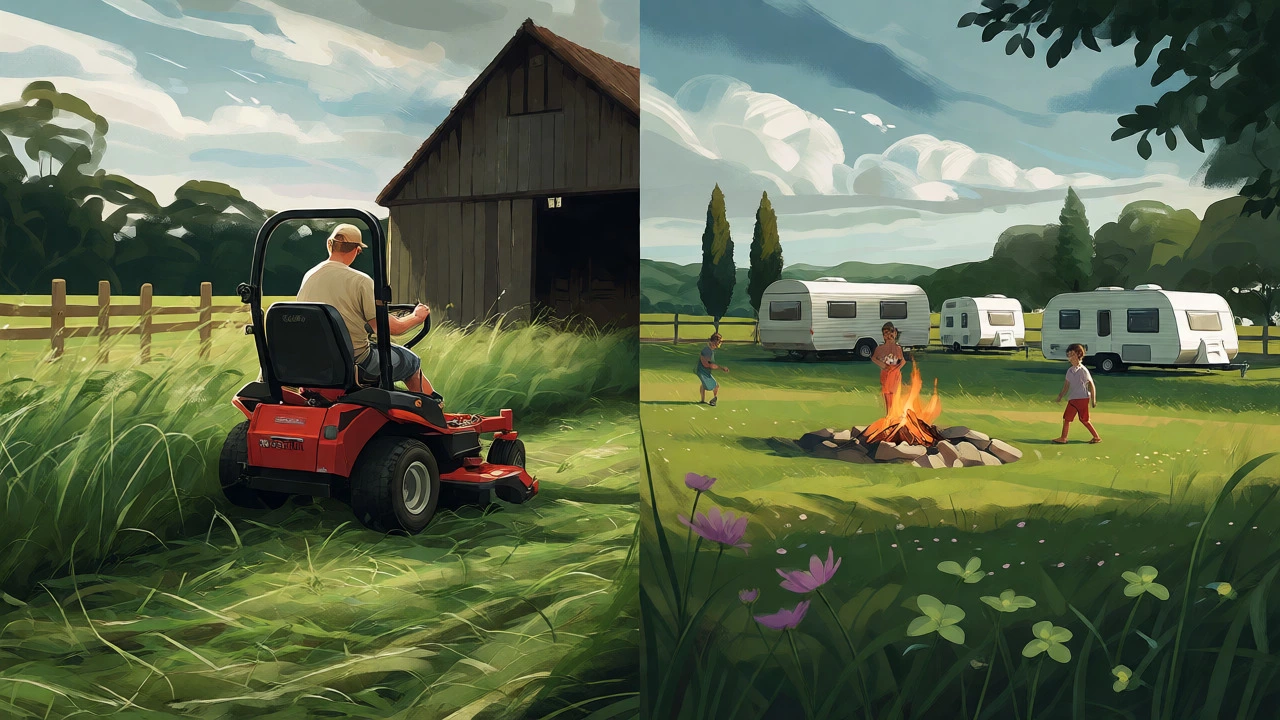
Do you have boats, caravans, or tractors? Urban storage units get expensive fast. On 5 acres, you can park multiple vehicles, store equipment, and even create a gravel pad for heavy machinery. Families often use this space for trampolines, swing sets, and fire pits. Kids can ride bikes safely because there’s no traffic nearby. It’s a safe haven for play.
Maintenance Reality Check
Buying land is easy. Keeping it nice is hard work. Many buyers underestimate the time required to maintain 5 acres.
- Mowing: If you keep it as lawn, mowing 5 acres takes hours. Most owners convert parts to pasture or native bush to reduce cutting.
- Weeding: Invasive species spread fast. Without regular attention, blackberry or gorse can take over within a year.
- Fencing: Perimeter fencing is expensive. Steel posts and wire cost money. If you plan to keep animals, budget heavily for fences.
- Access: Maintaining a long driveway costs fuel and wear on your vehicle. Gravel driveways need grading annually.
If you live in Auckland, humidity promotes rapid growth. Grass grows faster in wetter climates. Factor in seasonal labor or hire a local contractor for periodic maintenance if you don’t own a tractor.
Financial Implications of 5-Acre Plots
Price per acre varies drastically by location. Near a city center, land values skyrocket due to development potential. Rural areas offer cheaper land but higher infrastructure costs.
When calculating total cost, include:
- Connection Fees: Getting water, power, and internet to a remote 5-acre plot can cost tens of thousands of dollars.
- Rates: Council rates are often based on land value. Higher land value means higher annual taxes.
- Insurance: Homeowners insurance may cost more if the property includes outbuildings or agricultural elements.
Compare this to smaller lots. While a 5-acre block might cost twice as much as a 1-acre block, the utility doesn’t always scale linearly. Sometimes, paying extra for proximity to town saves money on commuting and infrastructure.
Regional Differences: US vs. NZ Context
Since I’m writing from Auckland, let’s address the metric system confusion. In the US, acres dominate rural listings. In New Zealand, hectares are standard, but agents often list both to appeal to international buyers.
In NZ, a "section" usually refers to urban land. "Lifestyle blocks" are typically 1-5 acres. "Rural properties" start larger. If you’re looking at 5 acres in New Zealand, you’re likely in the semi-rural zone. These areas are popular for their balance of accessibility and space. However, be aware of Title restrictions. Some titles have covenants limiting building height or prohibiting certain types of farming.
Climate plays a role too. In drier regions like Central Otago, 5 acres might not support dense vegetation without irrigation. In lush Northland, the same 5 acres might require constant clearing to prevent jungle-like overgrowth. Adapt your expectations to the local environment.
Common Mistakes Buyers Make
Don’t fall into these traps:
- Ignoring Soil Quality: Beautiful green grass doesn’t mean fertile soil. Get a soil test if you plan to farm.
- Overlooking Water Rights: Who owns the water? Is there a well? Is the aquifer deep? Droughts happen. Ensure reliable access.
- Assuming Flat Terrain: Walk the land. Look for erosion, wet spots, or unstable cliffs.
- Underestimating Neighbors: Visit at different times. Are there loud farms nearby? Noise ordinances vary.
Visit the property in winter. Summer hides mud, poor drainage, and bare trees. Winter reveals the true character of the land.
Final Verdict: Is 5 Acres Right for You?
If you want a petting zoo for kids, a place to park RVs, and room for a big garden without becoming a full-time farmer, 5 acres is ideal. It offers freedom without overwhelming responsibility.
If you dream of raising cattle commercially, look for 20+ acres. If you hate mowing lawns, consider 1 acre instead. Match the land size to your actual willingness to work, not just your fantasy of rural life.
How many football fields are in 5 acres?
Approximately 3.7 American football fields. Note that this includes the end zones. A standard playing field alone is slightly smaller, so the visual estimate remains close to 3-4 fields depending on the specific field dimensions used.
Is 5 acres considered a large property?
It depends on context. In urban areas, 5 acres is huge. In rural farming regions, it is considered a small holding or a "hobby farm." For residential purposes, it is large enough for significant privacy and outbuildings but small enough to manage personally.
Can I build a house on 5 acres?
Yes, almost certainly. Most jurisdictions allow single-family homes on lots this size. However, you must check local zoning laws regarding setbacks (distance from roads and boundaries), maximum coverage percentages, and environmental restrictions like wetlands or flood zones.
How long does it take to mow 5 acres?
With a riding mower, expect 4-6 hours for a complete cut, depending on terrain, grass height, and obstacles. With a push mower, it could take two full days. Most owners of 5-acre plots invest in a zero-turn rider or hire help during peak growing seasons.
What is 5 acres in hectares?
5 acres is equal to approximately 2.02 hectares. This conversion is crucial for buyers in countries like New Zealand, Australia, and Europe where hectares are the primary unit of measurement.