Highest ROI Property Types: Commercial Real Estate Investment Guide for 2026
Commercial Real Estate ROI Calculator & Analyzer
Enter values and click calculate to see your projected ROI metrics.
Key Definitions
- Cap Rate: NOI divided by Market Value. Measures yield independent of financing.
- Cash-on-Cash: Annual Cash Flow divided by Total Cash Invested. Measures actual return on your money.
- NOI: Gross rental income minus operating expenses (excluding mortgage principal).
Most investors chase the dream of passive income, but few stop to ask which asset actually pays the bills. You might assume luxury villas or trendy city apartments offer the best returns because they look good on social media. They don't. When you strip away the emotion and look at the cold, hard math of commercial property sale is the transaction of business-oriented real estate assets intended for profit generation rather than personal residence, a different picture emerges. The highest return on investment (ROI) in real estate isn't about where you live; it's about what generates consistent cash flow with minimal vacancy risk.
In 2026, the landscape has shifted. With remote work stabilizing and logistics demands soaring, traditional office spaces are struggling while industrial and specialized commercial assets are thriving. If you want to know where your money grows fastest, you need to look beyond residential comfort and into the mechanics of commercial leases, cap rates, and operational efficiency.
The Anatomy of High ROI in Real Estate
Before picking a property type, you have to understand how ROI works in this sector. Unlike residential rentals, where tenants pay for lifestyle, commercial tenants pay for their livelihood. This fundamental difference changes everything. A factory owner cannot afford to miss a rent payment any more than they can afford to miss payroll. This creates stronger lease agreements and longer tenancies.
There are two main ways to measure success here:
- Cash-on-Cash Return: This measures the annual pre-tax cash flow divided by the total cash invested. It tells you how much actual money you get back each year relative to what you put in.
- Capitalization Rate (Cap Rate): This is the Net Operating Income (NOI) divided by the current market value of the property. It helps you compare properties regardless of financing.
High ROI properties typically feature higher cap rates (often 6-8% or more) compared to prime residential assets (which might hover around 3-4%). But high returns always come with higher risks. Your job is to find the sweet spot where the risk is manageable through tenant quality and location.
Industrial Properties: The Silent Giants
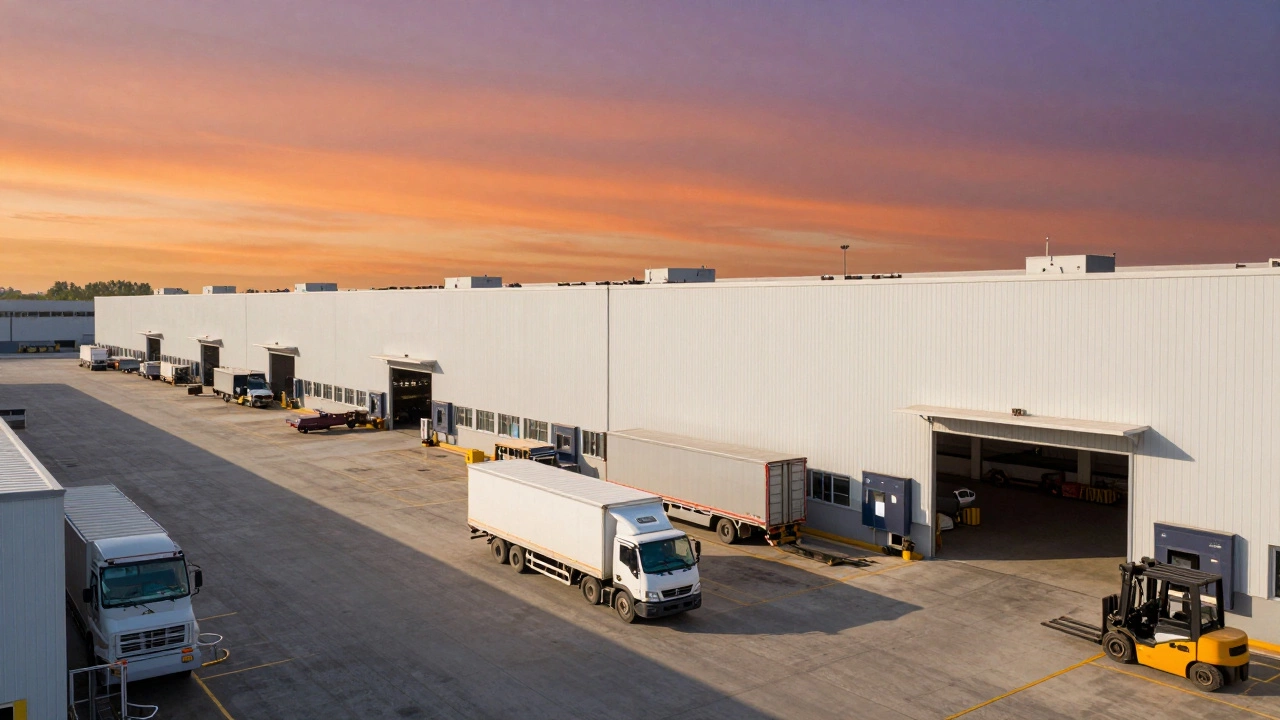
If you want raw numbers, industrial real estate is property used for manufacturing, production, distribution, and storage including warehouses and flex spaces currently leads the pack. The rise of e-commerce hasn't stopped; it has accelerated. Companies like Amazon, FedEx, and countless smaller DTC brands need space to store goods closer to consumers. This trend, known as "last-mile logistics," has driven up demand for smaller, strategically located warehouses.
Why does this mean high ROI?
- Long-term Leases: Industrial tenants often sign 10-to-20-year leases. This provides predictable income.
- Tenant Pays Expenses: Most industrial leases are Triple Net (NNN). The tenant pays for taxes, insurance, and maintenance. Your management headache drops significantly.
- Lower Vacancy Rates: Finding a warehouse is harder than finding an apartment. Once occupied, these spaces stay occupied.
A standard distribution center might yield a 7% cap rate, but with NNN structures, your net cash flow is much higher. Plus, land value in industrial zones is appreciating steadily due to scarcity near major highways and urban centers.
Self-Storage Facilities: Recession-Proof Cash Flow
Consider self-storage facilities is commercial real estate consisting of individual storage units rented to individuals or businesses for storing personal or business items. These assets are often overlooked by traditional investors who focus on offices or retail. Yet, self-storage consistently delivers some of the highest ROIs in the industry.
The economics are simple. People move frequently, downsize during retirements, or expand businesses and need extra space. The demand is constant. During economic downturns, people still need storage-even if they are downsizing homes. In booms, businesses need inventory space. It’s a hedge against economic cycles.
Operationally, self-storage is a winner. There are no plumbing issues between units, no landscaping requirements comparable to residential complexes, and low turnover costs. A well-managed self-storage facility can achieve operating margins of 60-70%. While the entry price per square foot can be high, the yield on cost remains attractive, often outperforming multifamily housing by 2-3 percentage points annually.

Medical Office Buildings (MOBs)
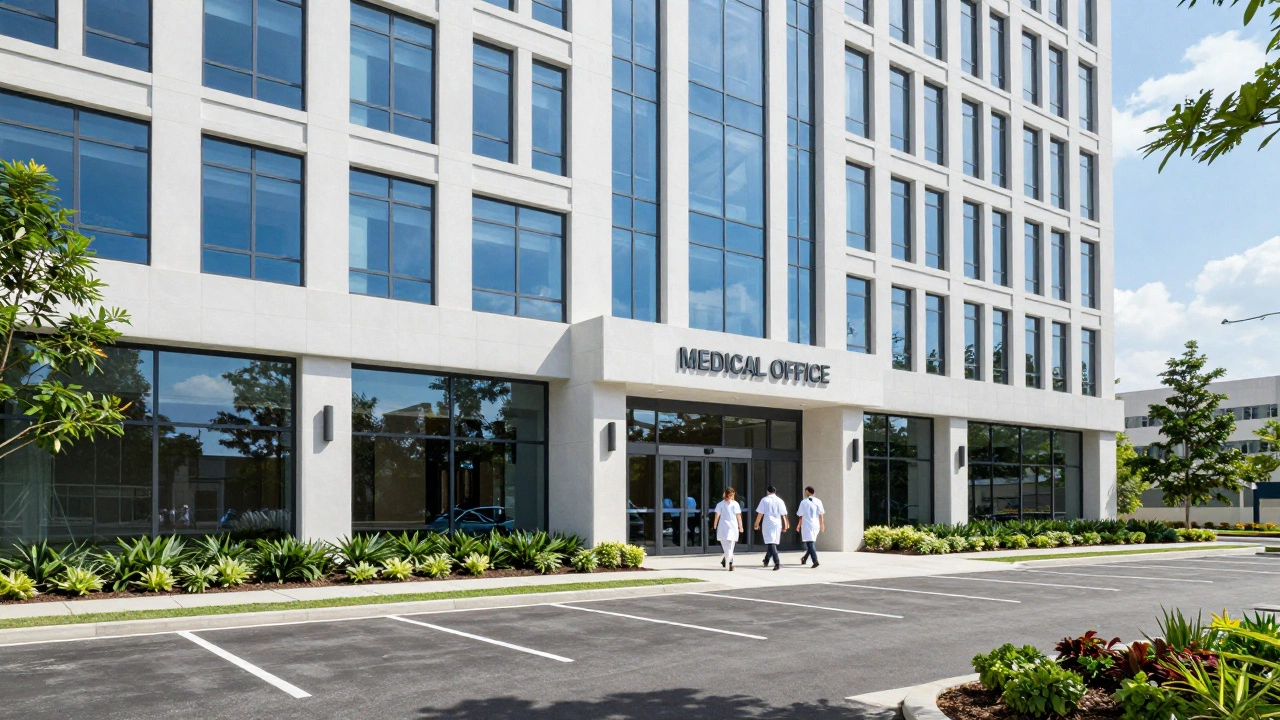
Another contender for high ROI is medical office buildings is commercial real estate designed specifically to house healthcare providers such as doctors, dentists, and specialists. Healthcare is non-discretionary. People will always need medical care, regardless of the economy. This makes MOBs incredibly stable.
Unlike general office space, which suffered from the remote-work shift, medical offices require patients to show up in person. Dentists, dermatologists, and primary care physicians need physical infrastructure. Tenants here are often long-term and creditworthy. Many leases include escalators tied to inflation, protecting your purchasing power over time.
The catch? Specialized fit-outs. You can’t just slap a generic office setup into a medical building. However, once established, the barrier to entry for competitors is high, securing your tenant base. Cap rates for MOBs are slightly lower than industrial but higher than retail, offering a balanced risk-reward profile.
Retail: The Selective Opportunity
Retail got a bad rap after the pandemic, but not all retail is equal. essential retail is commercial spaces housing businesses that provide necessary goods and services such as grocery stores, pharmacies, and hardware shops remains a strong ROI candidate. Think grocery anchors, dollar stores, and quick-service restaurants.
People still buy food, medicine, and household supplies in person. Online shopping didn’t kill retail; it killed *discretionary* retail. The malls that struggled were those filled with clothing boutiques. The strip malls anchored by supermarkets thrived. Investing in essential retail offers steady foot traffic and resilient rents. Just avoid standalone big-box retailers unless they have a unique community draw.
Comparison of Top Commercial Property Types
| Property Type | Avg. Cap Rate | Lease Structure | Management Intensity | Risk Level |
|---|---|---|---|---|
| Industrial/Warehouse | 6.5% - 8.5% | Triple Net (NNN) | Low | Medium |
| Self-Storage | 7.0% - 9.0% | Gross/Monthly | Medium | Low |
| Medical Office | 5.5% - 7.0% | Modified Gross | Low-Medium | Low |
| Essential Retail | 6.0% - 7.5% | Gross/Percentage | Medium | Medium |
| Class B Office | 5.0% - 6.5% | Gross | High | High |
Note that Class A office space is excluded from the "highest ROI" list due to high vacancy risks and lower yields in the post-2020 era. The data clearly points toward industrial and self-storage as the top performers for pure return metrics.
Factors That Kill ROI
Even the best property type can fail if you ignore key pitfalls. Location is still king, but in commercial real estate, "location" means accessibility. For industrial, it’s proximity to highways. For retail, it’s visibility and parking. For self-storage, it’s ease of entry and exit for trucks.
Another silent killer is poor tenant screening. A single default can wipe out years of gains. Always analyze the tenant’s financial health, not just their credit score. Look at their revenue trends, customer base, and lease expiration dates. Diversification helps-avoid having one tenant occupy more than 30-40% of your leasable area unless they are an investment-grade corporation.
Finally, beware of hidden costs. Environmental liabilities in older industrial sites, zoning restrictions, and unexpected capital expenditures can erode your ROI. Due diligence is not optional; it’s the foundation of your profit margin.
Strategic Next Steps for Investors
If you’re ready to capitalize on these opportunities, start by defining your risk tolerance. Want hands-off income? Look at NNN industrial or medical offices. Want active management with higher upside? Self-storage might be your play.
Connect with local commercial brokers who specialize in these niches. They have access to off-market deals before they hit public listings. Analyze local demographic trends-is the population growing? Are new logistics hubs being built nearby? Align your investment with regional growth patterns.
Remember, the highest ROI isn’t just about buying cheap; it’s about buying right. Focus on assets with structural advantages, strong tenant profiles, and clear paths to appreciation. In 2026, the winners will be those who adapt to the new normal of commerce, not those clinging to outdated models.
What is the average ROI for commercial real estate in 2026?
The average ROI varies by property type. Industrial and self-storage properties typically yield 7-9% cash-on-cash returns, while medical offices and essential retail range from 5-7%. General office spaces may offer lower yields due to higher vacancy risks.
Is self-storage really recession-proof?
Self-storage is highly resilient. Demand increases during both economic booms (business expansion) and recessions (home downsize/moving). It has low correlation with other economic sectors, making it a strong diversifier in a portfolio.
How do I calculate the cap rate for a commercial property?
Cap Rate = Net Operating Income (NOI) / Current Market Value. NOI is calculated by taking gross rental income and subtracting operating expenses (excluding mortgage payments and depreciation). This metric helps compare properties objectively.
What is a Triple Net (NNN) lease?
A Triple Net lease requires the tenant to pay three additional costs besides rent: property taxes, building insurance, and maintenance/repairs. This structure reduces the landlord's expense burden and often results in higher net cash flow.
Should I invest in office space given remote work trends?
Be cautious. Traditional Class A and B office spaces face long-term headwinds from hybrid work models. If investing in offices, focus on Class A buildings in prime locations with amenities that attract employees, or consider converting underutilized office space to mixed-use or residential.