How to Calculate Rent-to-Own Payments: A Step-by-Step Guide
Rent-to-Own Payment Calculator
Property & Deal Terms
Fees & Credits
Your Monthly Breakdown
Total Cost Analysis
vs Traditional Buying
If you saved $0/month in a high-interest account:
You’re tired of throwing money away on rent. You want equity. That’s why you’re looking at a rent-to-own is a real estate arrangement where a tenant rents a property with the option or obligation to buy it later. Also known as lease-option, this path can bridge the gap between renting and owning, but only if the numbers work.
Here is the hard truth: most people fail because they treat the monthly payment like a standard rent check. It isn’t. It’s a hybrid product. Part rent, part savings, part insurance.
If you don’t calculate the true cost upfront, you might end up paying more for the house than its market value-or worse, losing your entire deposit when the option expires. Let’s break down exactly how to calculate these payments so you don’t get blindsided.
The Anatomy of a Rent-to-Own Payment
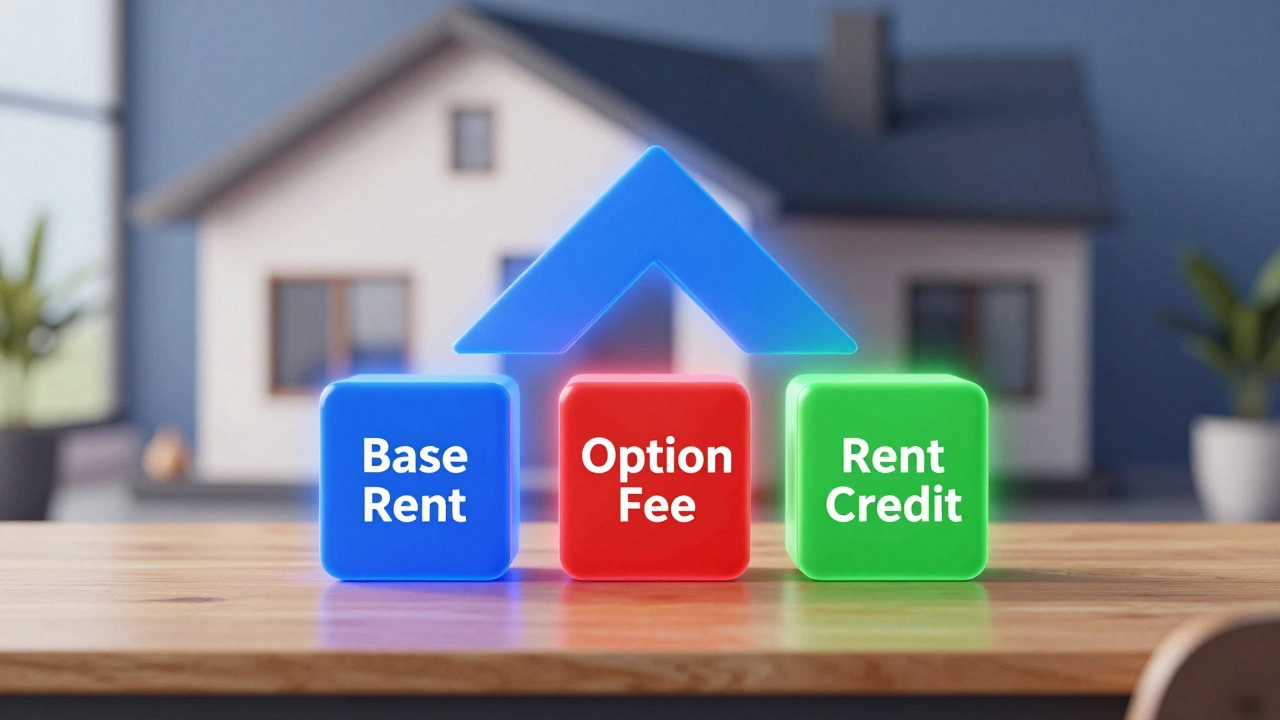
To calculate what you’ll pay each month, you first need to understand that there are usually two distinct figures involved. In many agreements, especially in New Zealand and similar markets, you have the Base Rent and the Option Fee.
- Base Rent: This covers the landlord’s costs (mortgage, rates, maintenance) plus their profit margin. It is often higher than standard market rent-sometimes by 10% to 20%.
- Option Fee (or Premium): This is a separate, non-refundable fee paid monthly or upfront. This buys you the *right* to purchase the home at a fixed price later. If you walk away, you lose this money.
However, not all contracts are created equal. Some landlords offer a Rent Credit. This means a portion of your Base Rent (say, 15%) is set aside into an escrow account or credited toward the final purchase price. If you don’t buy the house, you typically forfeit this credit too.
Your total monthly outflow is simple arithmetic:
| Component | Purpose | Refundable? |
|---|---|---|
| Base Rent | Living in the property | No (unless credited) |
| Option Fee | Purchasing the right to buy | No |
| Rent Credit Portion | Applied to down payment | Only if purchased |
Step 1: Determine the Agreed Purchase Price
Before you touch a calculator, you need the Strike Price. This is the price you will pay if you decide to buy the home at the end of the lease term. This number is negotiated at the start.
If the current market value is $600,000, and the seller agrees to fix the price at $600,000 for three years, you are protected against inflation. If the market jumps to $700,000, you win. If it drops to $550,000, you lose because you’re locked into a higher price.
Ask yourself: Is this strike price fair? Compare it to recent sales of similar homes in Auckland or your local area. If the strike price is already 10% above market value, no amount of clever rent calculation will save you from overpaying.
Step 2: Calculate the Monthly Option Fee
This is the trickiest part. The option fee compensates the seller for taking the house off the market. They could sell it to someone else for cash; instead, they wait for you.
There is no legal standard for this fee, but industry norms suggest it should be between 1% and 5% of the purchase price, paid either upfront or spread over the lease term.
Example Scenario:
Purchase Price: $500,000
Lease Term: 3 years (36 months)
Agreed Option Fee: 3% of purchase price = $15,000
If paid monthly, that’s $15,000 / 36 months = $416 per month. This $416 goes directly to the seller as profit. It does not go toward the house price. It is gone forever if you do not buy.
Step 3: Factor in the Rent Premium and Credits
Now look at the rent. Standard market rent for a comparable home might be $2,000/month. But in a rent-to-own deal, the landlord might charge $2,400/month. Why? Because they are providing flexibility.
Let’s say the contract includes a 20% rent credit. Here is how you calculate the effective cost:
- Total Monthly Payment: $2,400 (Rent) + $416 (Option Fee) = $2,816
- Rent Credit Calculation: 20% of $2,400 = $480
- Net Cash Outflow (if buying): $2,816 - $480 (credited) = $2,336 effectively spent on living costs + option fee.
Wait, that doesn’t sound right. You still paid $2,816. The $480 just reduces your down payment later. So, think of it this way: You are paying $2,816 every month. Of that, $480 is "saved" for the purchase. The remaining $2,336 is pure consumption (living expenses + option fee).
Step 4: Calculate the Total Cost of Ownership
This is where most deals fall apart. You need to sum up everything you’ve paid over the lease term and add it to the final purchase price.
The Formula:
Total Cost = (Monthly Payment × Number of Months) + Strike Price + Closing Costs
Using our example:
• Monthly Payment: $2,816
• Duration: 36 months
• Total Paid During Lease: $101,376
• Strike Price: $500,000
• Estimated Closing Costs (lawyer, transfer fees): $5,000
Total Equity Built:
Option Fees ($15,000) + Rent Credits ($17,280) = $32,280
Final Mortgage Needed:
$500,000 - $32,280 = $467,720
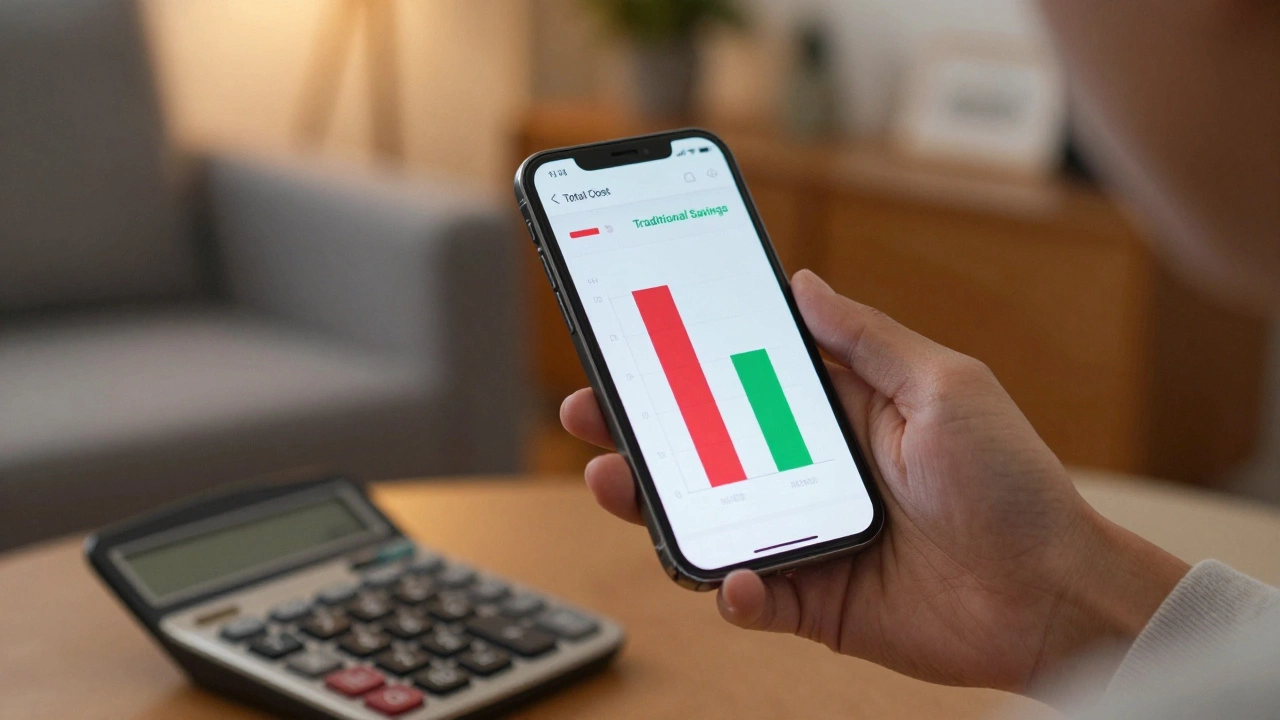
Compare this to a traditional purchase. If you had saved $2,816/month in a high-interest savings account earning 4%, you’d have roughly $109,000. Your down payment would be larger, and you wouldn’t have paid the seller $15,000 in non-equity option fees.

Hidden Costs That Kill the Deal
When calculating your budget, never ignore these hidden drains:
- Maintenance Responsibilities: In many rent-to-own contracts, the tenant acts as the owner. You fix the roof, you replace the boiler. Budget $500-$1,000 annually for unexpected repairs.
- Insurance: You may need both contents insurance and a specific policy for the structure, depending on who holds the title.
- Legal Fees: Drafting a robust lease-option agreement costs money. Do not use a generic template. Hire a property lawyer. In NZ, expect to pay $1,500-$2,500 for a proper review.
- Valuation Gaps: If the bank values the home lower than the strike price at the end of the term, you must cover the difference in cash.
Is It Worth It? A Decision Checklist
Use this checklist before signing anything. If you answer "no" to more than two items, reconsider.
- Is the strike price below or equal to current market value?
- Can I afford the higher monthly payment without stretching my budget?
- Do I have a clear plan to secure financing within the lease term?
- Have I verified the seller actually owns the property free and clear?
- Is the rent credit percentage significant enough (at least 10-15%) to offset the premium rent?
Rent-to-own is not a magic bullet. It is a financial tool. Used correctly, it helps you build discipline and force-save for a down payment while living in the home you want. Used incorrectly, it is an expensive rental with extra steps.
Calculate the numbers coldly. Emotion has no place in the spreadsheet. If the math shows you’re paying $50,000 more than a traditional mortgage over five years, walk away. There are other ways to buy.
What happens to my rent credits if I don't buy the house?
In almost all standard rent-to-own agreements, rent credits are forfeited if you choose not to purchase the property. They are essentially a penalty for breaking the option. Always read the "default" clause carefully. Some rare contracts allow partial refunds, but this is not the norm.
How is the option fee different from a security deposit?
A security deposit protects the landlord against damage or unpaid rent and is refundable. An option fee is non-refundable compensation for the right to buy the home later. You pay the option fee to lock in the price; you pay the deposit to ensure you behave as a good tenant.
Can I negotiate the rent-to-own terms?
Yes, everything is negotiable. You can ask for a lower option fee, a higher rent credit percentage, or a longer lease term. Sellers often prefer certainty over speed, so offering a strong, well-calculated proposal can give you leverage.
Who pays for major repairs during the lease term?
This depends entirely on the contract. In a "lease-purchase" model, the tenant often takes on owner-like responsibilities, including major repairs. In a "lease-option," the landlord may retain responsibility. Clarify this explicitly to avoid surprise bills for things like HVAC replacement or roof leaks.
What if the house value drops during the lease term?
You are stuck with the agreed strike price. If the market crashes, you may owe more than the house is worth (negative equity). This is the biggest risk of rent-to-own. Ensure the strike price is conservative and consider a shorter lease term to reduce exposure to market volatility.