Is a 600 sq ft 2BHK Apartment Too Small? A Practical Guide
Compact Living Suitability Calculator
Not sure if 600 sq ft is right for you? Answer these questions to get a personalized suitability score and practical advice.
Your Lifestyle Profile
Suitability Score
--%Key Insights & Strategies
Pre-Signing Checklist
Click items above to mark them as checked during your site visit.
Ready to Analyze
Fill out your profile on the left and click "Calculate Suitability" to see if 600 sq ft works for you.
You’re scrolling through listings, and you spot it: a 600 sq ft apartment that’s technically a two-bedroom unit. It’s affordable, it’s in the right neighborhood, but a nagging voice asks, "Can I actually live here without losing my mind?" This is the million-dollar question for anyone eyeing compact urban housing. The short answer? No, it’s not too small-if you stop thinking like you’re furnishing a suburban house and start thinking like you’re designing a high-efficiency cockpit.
Living in 600 square feet (about 55 square meters) changes your relationship with stuff. It forces intentionality. But before you sign that lease or mortgage, let’s break down exactly what this size means in real life, how to make a two-bedroom configuration work, and where the hidden pitfalls lie.
The Reality of 600 Square Feet
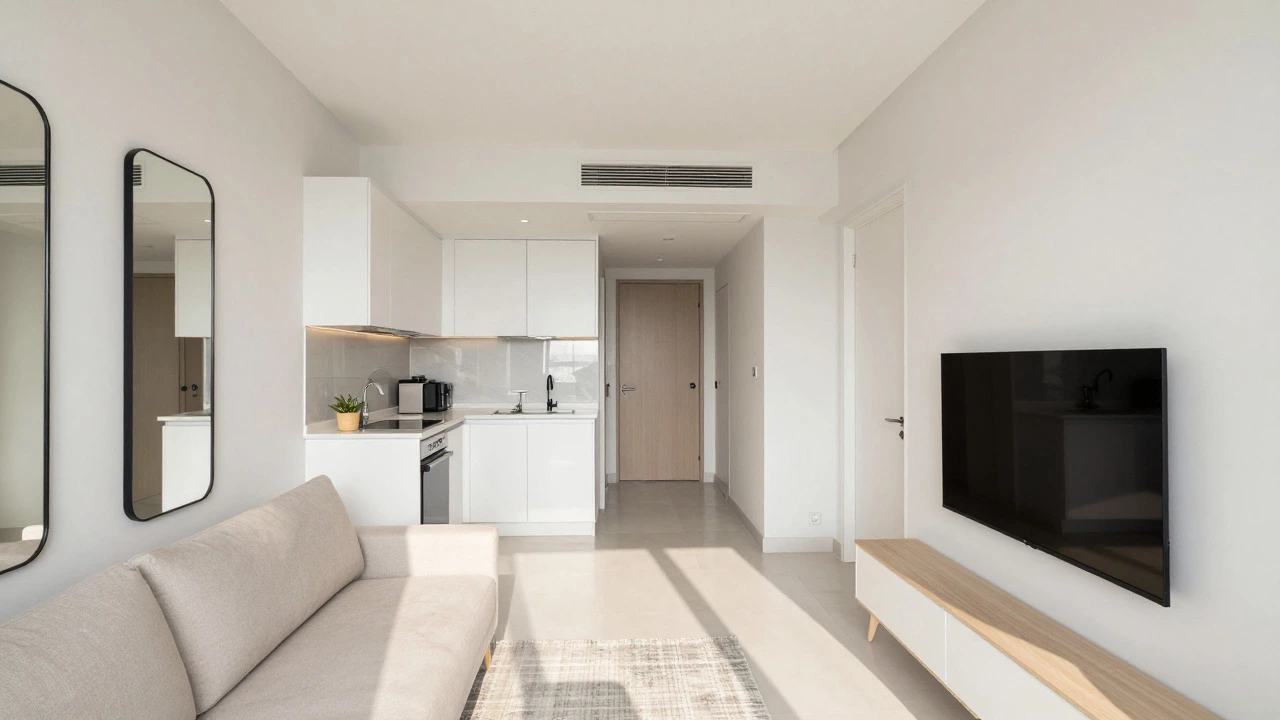
First, let’s get past the marketing fluff. When developers say "600 sq ft," they often mean gross area, which includes walls, ducts, and sometimes even a sliver of the balcony. Net usable floor space might be closer to 520-540 sq ft. That sounds tighter, right? But look at successful micro-apartments in cities like Tokyo, New York, or Auckland. They prove that density doesn’t equal discomfort; it just demands smarter design.
A standard 600 sq ft unit usually splits into:
- Living/Dining/Kitchen Zone: Roughly 250-300 sq ft. This is your primary social hub.
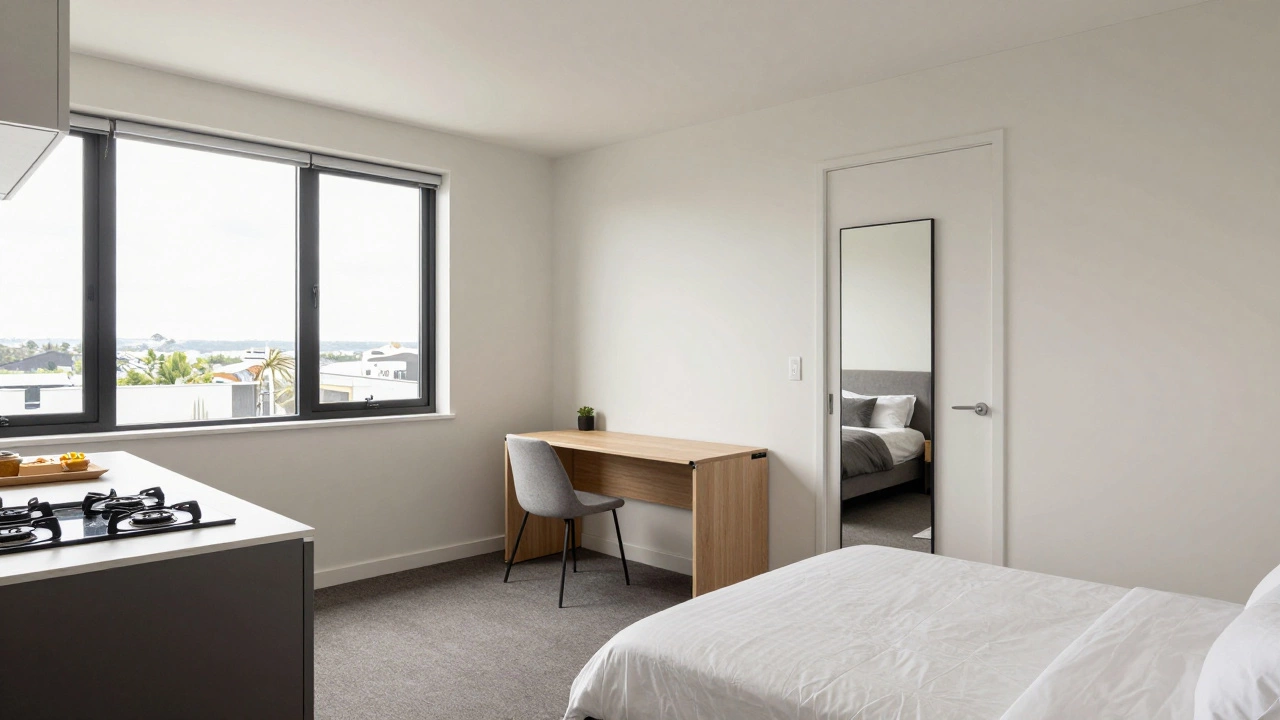
- Master Bedroom: Around 100-120 sq ft. Enough for a queen bed if placed correctly.
- Second Bedroom: Often 80-90 sq ft. This is the tricky one. It’s rarely big enough for a full-sized double bed unless you sacrifice walkways.
- Bathroom & Entryway: The remaining 100-120 sq ft covers plumbing, storage closets, and circulation paths.
If you’re expecting separate dining rooms and walk-in closets, you’ll be disappointed. But if you view these zones as multi-functional stages, the space opens up.
Who Actually Fits in a 2BHK Compact Unit?
Not everyone thrives in tight quarters. Your lifestyle dictates whether 600 sq ft feels cozy or claustrophobic. Here’s who tends to succeed:
| Resident Profile | Suitability | Key Challenge | Mitigation Strategy |
|---|---|---|---|
| Single Professional | Excellent | Loneliness/Empty Space | Use second room as office/gym |
| Couple (No Kids) | Good | Clutter Accumulation | Strict "one in, one out" rule |
| Parent + One Child | Moderate | Toy Storage | Vertical storage & under-bed bins |
| Two Adults Sharing | Poor | Lack of Privacy | Soundproofing & strict schedules |
| Family of Four | Very Poor | Overcrowding | Consider moving to 3BHK+ |
Notice the pattern? The more people you have, the harder it gets. A single person uses the second bedroom as a sanctuary-a home office or guest room. A couple might struggle if both need distinct hobbies. Families with young kids can manage, but only if the child’s room doubles as a play zone during the day.
Designing for Flow: Layout Matters More Than Size
In a large house, bad layout is annoying. In a 600 sq ft apartment, bad layout is unlivable. You need to optimize every inch.
Open Plan is Non-Negotiable
If the kitchen has a wall separating it from the living room, knock it down (if structural rules allow). Visual continuity makes the space feel larger. Use an island or a breakfast bar to define the kitchen zone without blocking light. This creates a "great room" effect, letting natural light travel from windows on one side to the other.
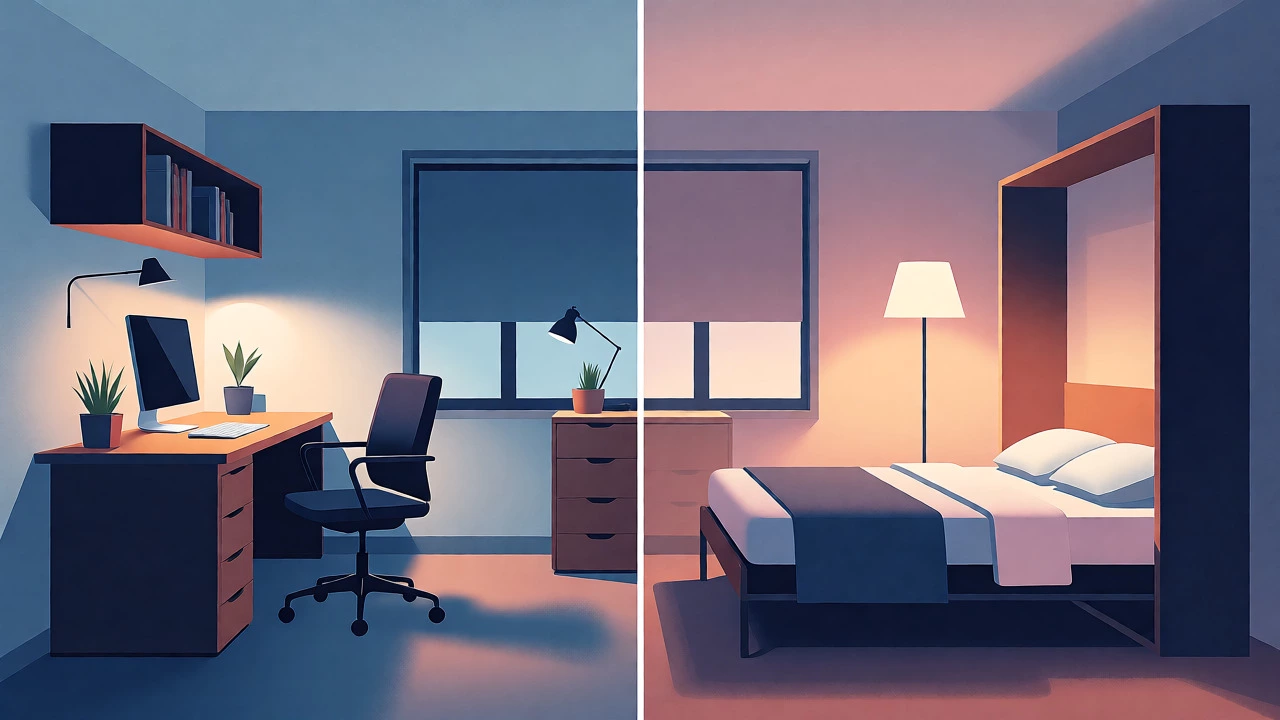
The Second Bedroom Dilemma
Most 600 sq ft 2BHKs have a tiny second bedroom. Trying to fit a standard double bed (135cm x 190cm) leaves no room for a wardrobe. Instead, consider:
- Folding Beds: Murphy beds or sofa beds turn the room into a study by day and a guest room by night.
- Twin Beds: If sharing, two singles take less visual bulk than one double.
- Lofted Beds: For children, elevating the bed frees up floor space for desks or play areas underneath.
Vertical Storage Wins
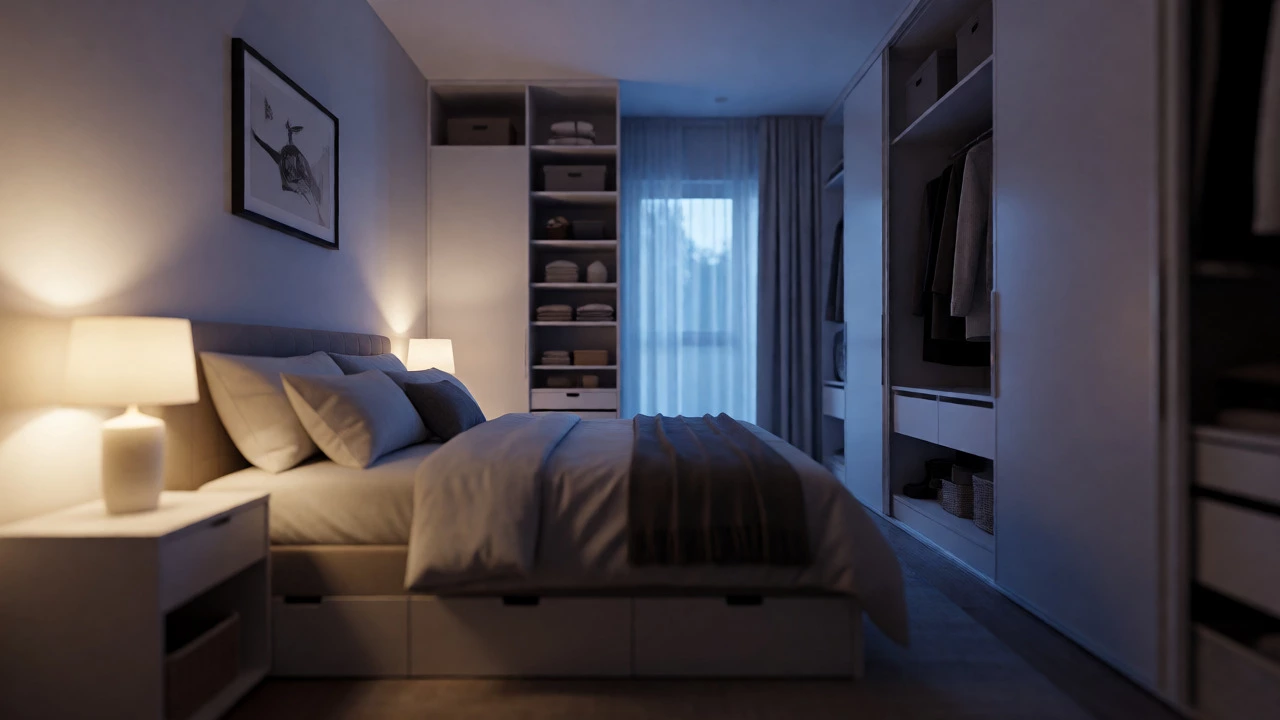
You don’t have floor space, so go up. Floor-to-ceiling shelves are your best friend. In Auckland’s humid climate, ensure these units are ventilated to prevent mold behind books or clothes. Use over-door hooks for coats and bags-don’t let them pile up on chairs.
The Hidden Costs of Small Spaces
It’s not just about furniture fitting. There are operational realities to owning or renting a compact unit.
Laundry Logistics
Does the unit have internal laundry? Many older 600 sq ft apartments rely on communal laundries. If yours doesn’t have space for a washer-dryer combo, factor in time and cost. A stackable washer-dryer fits in a closet but takes 4-6 hours per cycle. Can you tolerate waiting for clean socks?
Entertaining Constraints
Hosting dinner for six? You’ll need folding chairs stored in the hallway. Cooking for guests means clearing counters constantly. Accept that your home is for intimate gatherings, not parties. If you love hosting, invest in a nearby park or community hall access instead.
Storage Tax
Every item needs a designated spot. If you buy new shoes, old ones must leave. This "storage tax" saves money because you can’t impulse-buy clutter. However, it requires discipline. If you’re a collector of vinyl records or hiking gear, 600 sq ft will feel like a prison cell unless you rent off-site storage.
Financial Perspective: Is It Worth It?
Let’s talk numbers. In many markets, price-per-square-foot drops as unit size increases. Smaller units often have higher price-per-sq-ft values due to location premiums (city centers) but lower total entry costs.
For investors, 600 sq ft 2BHKs attract specific tenants: students, young professionals, or downsizers. These groups value location over space. Rental yields can be strong because maintenance costs are low, and vacancy rates remain steady if the building amenities (gym, pool) compensate for the small private space.
For owner-occupiers, the savings come from utilities and council rates. Heating 55 sq m is cheaper than 100 sq m. In New Zealand’s damp winters, smaller spaces heat faster and retain warmth better, reducing energy bills significantly.
Practical Checklist Before You Sign
Don’t trust the floor plan alone. Visit the site with a tape measure and a critical eye.
- Check Window Placement: Can you open windows in both bedrooms for cross-ventilation? Stuffy air makes small spaces feel smaller.
- Measure Door Swings: Do doors swing into traffic paths? Sliding doors save 2-3 sq ft each, which adds up.
- Test Acoustic Insulation: Tap the walls. Thin drywall means you hear neighbors’ TVs. In dense buildings, ask about soundproofing standards.
- Evaluate Natural Light: Does the living area get direct sunlight? Dark corners shrink perceived space. North-facing units (in the Southern Hemisphere) are gold.
- Inspect Closet Depth: Standard hangers need 24 inches (60 cm) depth. Shallow closets force bulky items onto shelves, creating visual chaos.
If the unit passes these checks, it’s likely livable. If it fails two or more, reconsider.
Alternatives to Consider
If 600 sq ft feels too tight, look at adjacent options:
- 700-800 sq ft 2BHK: The sweet spot. Adds ~15% space, often allowing a proper dining table and larger wardrobes.
- Studio + Balcony: Sometimes a large studio with outdoor space beats a cramped 2BHK.
- Older Buildings: Pre-1990s apartments often have thicker walls and higher ceilings, making them feel airier despite similar footprints.
But remember: bigger isn’t always better. A poorly designed 1,000 sq ft unit can feel worse than a well-designed 600 sq ft one. Focus on flow, light, and storage-not just raw square footage.
Can I fit a king-size bed in a 600 sq ft 2BHK?
Technically yes, but practically no. A king bed (approx. 1.8m x 2m) dominates a 100 sq ft bedroom, leaving little room for movement or bedside tables. Most residents opt for a queen bed to maintain walkable pathways.
Is a 600 sq ft apartment good for resale value?
Generally, yes. Compact units appeal to first-time buyers and investors seeking yield. However, capital growth may lag behind larger family homes in suburbs. Location remains the biggest driver of resale value for small units.
How do I hide clutter in a small apartment?
Use closed storage. Open shelving looks messy quickly. Opt for cabinets with doors, ottomans with lids, and under-bed containers. Keep surfaces clear except for decorative items. Less visible stuff equals a calmer mind.
Do small apartments have lower utility bills?
Yes. Heating and cooling costs drop significantly because there’s less volume to condition. Lighting costs also decrease since fewer fixtures are needed. Expect 20-30% lower energy expenses compared to a 1,000 sq ft unit.
What is the biggest mistake people make in small apartments?
Buying oversized furniture. A massive sectional sofa blocks pathways and makes the room feel cramped. Measure twice, buy once. Choose scaled-down pieces with exposed legs to create a sense of openness.