Is an Acre 200 ft by 200 ft? The Real Math Behind Land Measurements
Land Area & Acreage Calculator
- 1 Acre = 43,560 sq ft
- Square Acre ≈ 208.7 ft sides
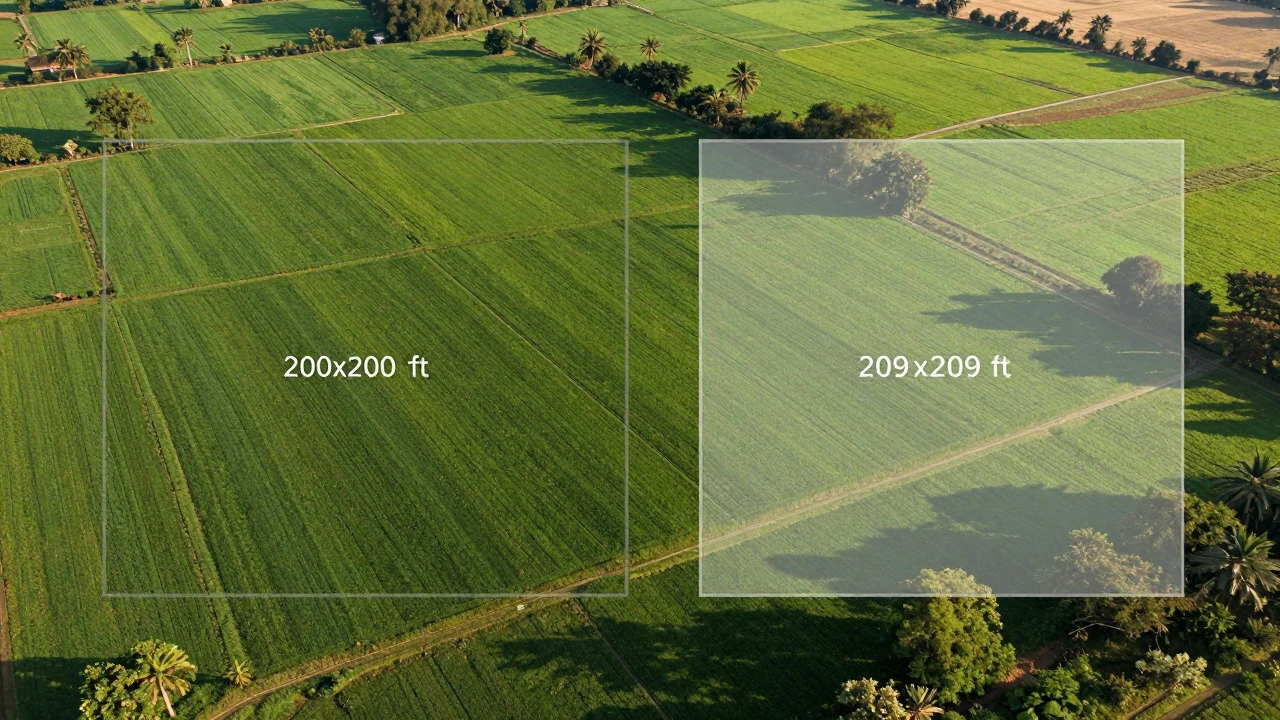
You’re standing on a plot of land, looking at the listing that says "1 Acre." You picture a perfect square, maybe 200 feet by 200 feet. It sounds neat. It sounds manageable. But here’s the catch: that mental image is wrong. If you build a fence around a 200x200 foot area, you won’t have an acre. You’ll have significantly less.
Understanding exactly how big an acre is a unit of land area equal to 43,560 square feet matters when you are buying property. Whether you are planning a backyard garden, building a house, or investing in raw land, getting the math right saves you from expensive surprises later.
The Short Answer: No, It Is Not 200 x 200
If you multiply 200 feet by 200 feet, you get 40,000 square feet. An actual acre contains 43,560 square feet. That means a 200x200 square is about 8% smaller than an acre. In real estate terms, that missing chunk isn't just a rounding error; it's enough space for a small shed, a driveway, or a decent-sized vegetable patch.
To visualize this difference, imagine a standard American football field (without the end zones). That field is roughly 48,000 square feet. An acre is slightly smaller than that field. A 200x200 square is even smaller than the acre. So, if a seller tells you their land is "roughly 200 by 200," they are either estimating loosely or selling you short.
What Does One Acre Actually Look Like?
The definition of an acre is rigid, but its shape is flexible. This is where most buyers get confused. An acre is defined by total area, not specific side lengths. Here is the breakdown:
- Total Area: 43,560 square feet.
- In Square Yards: 4,840 square yards.
- In Square Meters: Approximately 4,047 square meters.
- In Hectares: About 0.405 hectares.
If you want a perfect square that equals one acre, each side needs to be approximately 208.71 feet long. Let’s do the math quickly: 208.71 multiplied by 208.71 equals 43,560. So, if you see a listing describing a square plot, look for sides closer to 209 feet, not 200.
| Shape Type | Dimensions (Feet) | Total Square Footage |
|---|---|---|
| Perfect Square | 208.71 ft x 208.71 ft | 43,560 sq ft |
| Standard Football Field | 330 ft x 165.33 ft | ~54,450 sq ft (includes end zones, slightly larger than 1 acre) |
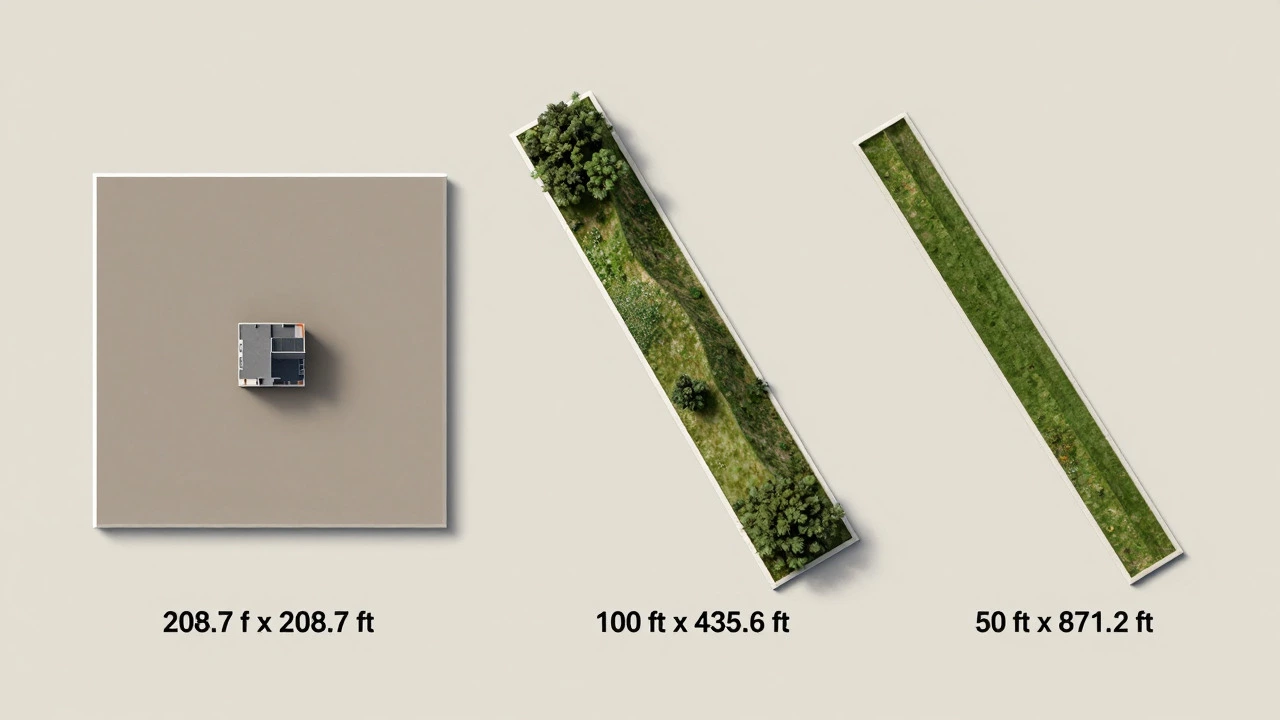
| Long Strip | 100 ft x 435.6 ft | 43,560 sq ft |
| Narrow Road Frontage | 50 ft x 871.2 ft | 43,560 sq ft |
Notice how drastically the shape changes while the area stays the same. A 100-foot wide lot needs to stretch over 435 feet deep to hit that one-acre mark. A narrow lot with only 50 feet of road frontage must be nearly 900 feet long. This variance is critical when you are assessing usability.
Why Shape Matters More Than Size
When browsing listings for land for sale, two parcels might both say "1 Acre." One could be a tidy square near a highway. The other could be a thin sliver running up a steep hill. Both have the same square footage, but their value and utility are worlds apart.
Buildability: Most local zoning laws require a minimum width for a house foundation. If your acre is 50 feet wide, you might struggle to fit a standard garage and living space without encroaching on setbacks. A 200-foot width gives you plenty of room to maneuver.
Access and Utilities: Long, narrow lots often mean longer runs for water lines, sewage pipes, and electricity. These installation costs can eat into your budget quickly. A compact square shape minimizes the distance utilities need to travel from the street to your home.
Fencing Costs: Perimeter length affects fencing prices. A square acre has a perimeter of about 835 feet. A long, thin acre (100x435) has a perimeter of 1,071 feet. That extra 236 feet of fence adds up fast, especially if you are using premium materials like wrought iron or cedar.
How to Verify Land Dimensions Before Buying
Don’t trust the listing description alone. Real estate agents are great at selling, but they aren't always surveyors. Here is how to protect yourself:
- Request a Survey Map: A professional land survey shows exact boundaries, easements, and topography. It will list the precise measurements of every side of the property.
- Check the Deed Description: Legal descriptions use metes and bounds or lot/block numbers. While hard to read for beginners, these documents define the legal limits of the land.
- Use GPS Tools Cautiously: Smartphone apps can give rough estimates, but consumer-grade GPS is rarely accurate enough for property lines. Use them for ballpark figures, not final decisions.
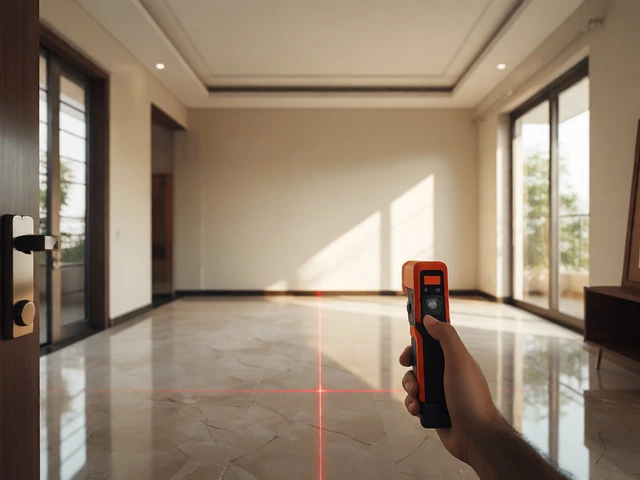
- Walk the Property: Bring a measuring tape or a laser measure. Check key distances like the distance from the road to the proposed house site. Look for existing fences or markers that might indicate boundary disputes.
Common Land Measurement Confusions
Beyond the 200x200 myth, there are other mix-ups that trip people up. Understanding these terms helps you navigate conversations with sellers and agents.
Rod vs. Rods: Historically, an acre was defined as 4 rods by 40 rods. A rod is 16.5 feet. So, 4 rods (66 feet) by 40 rods (660 feet) equals 43,560 square feet. You might hear older farmers refer to "chains" or "rods." One chain is 66 feet. An acre is also 10 square chains.
Hectares: If you are looking at international listings or scientific data, you’ll see hectares. One hectare is 10,000 square meters. Since an acre is ~4,047 square meters, one hectare is roughly 2.47 acres. Always double-check which system is being used, especially if you are importing equipment or comparing global prices.
Gross vs. Net Area: Sometimes developers advertise "net buildable area" versus "gross land area." Gross includes roads, drainage ditches, and common areas. Net is what you actually own. Make sure you know which number you are paying for.
Practical Examples: What Can You Do With an Acre?
To put 43,560 square feet into perspective, let’s look at some common projects:
- Residential Home: A typical suburban house with a large yard fits easily on half an acre. A full acre allows for a larger home, a pool, a guest house, and extensive landscaping.
- Agriculture: For crops, an acre is a significant amount of work. Growing corn or wheat on one acre requires specialized machinery. However, high-value crops like berries, vegetables, or nursery plants can thrive on smaller sections of an acre.
- Solar Panels: A residential solar array might take up 500-1,000 square feet. You could fit dozens of homes' worth of solar capacity on a single acre, making it attractive for community solar projects.
- Trees: If planting an orchard, spacing depends on the tree type. Apple trees might be spaced 15 feet apart. On an acre, you could plant roughly 200 apple trees. This density affects sunlight exposure and harvesting logistics.
FAQ
Is 200 feet by 200 feet an acre?
No. A 200x200 foot square is 40,000 square feet. An acre is 43,560 square feet. Therefore, a 200x200 plot is about 8% smaller than an acre.
What are the dimensions of a square acre?
A perfectly square acre has sides that are approximately 208.71 feet long. Multiplying 208.71 by 208.71 gives you the standard 43,560 square feet.
How many square feet are in an acre?
There are exactly 43,560 square feet in one acre. This is the standard definition used in the United States and other countries using the imperial system.
Is an acre bigger than a football field?
It depends on how you measure the field. An American football field including the end zones is 360 feet by 160 feet, which is 57,600 square feet-larger than an acre. Without the end zones, the playing area is 48,000 square feet, which is still larger than an acre. So, an acre is actually smaller than a standard football field.
How do I calculate the acreage of my land?
Multiply the length by the width in feet to get the square footage. Then, divide that number by 43,560. For example, if your land is 300 feet by 300 feet (90,000 sq ft), dividing by 43,560 gives you approximately 2.07 acres.
Does the shape of the land affect its price per acre?
Yes. Irregular shapes, narrow frontages, or sloped terrain can reduce the usable value of the land, potentially lowering the price per acre compared to a flat, square plot with good road access.