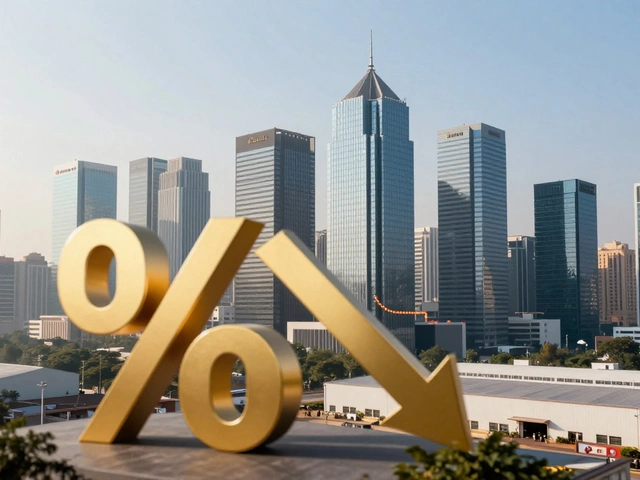
Discover the typical payback period for commercial real estate, how to calculate it, key factors that affect it, and real‑world examples to help you make smarter investment decisions.
Cap Rate Explained: What It Means for Rental Property Investors
When you buy a rental property, the cap rate, the ratio of net operating income to property asset value, used to estimate potential return on investment. Also known as capitalization rate, it’s one of the first numbers smart investors check before signing anything. It doesn’t care about your mortgage, your down payment, or your credit score. It just asks: how much cash does this property make each year, compared to what it costs? If a building nets $50,000 a year and costs $1 million, the cap rate is 5%. Simple. No guesswork.
Cap rate isn’t just for apartments. It’s used for commercial property, buildings rented to businesses like offices, retail spaces, or warehouses, and even large multi-family units. A good cap rate in a city like Mumbai might be 6% to 8%, but in quieter areas, you could find 9% or higher. That doesn’t mean the higher one is better—it just means the risk or condition might be different. A property with a 10% cap rate might need a new roof, have high vacancy, or sit in a neighborhood that’s still growing. A 5% cap rate might mean a brand-new building in a hot area, where prices are high but demand is steady.
Don’t confuse cap rate with cash flow, the actual money left after paying all bills, including your mortgage. Cap rate ignores debt. Cash flow includes it. You can have a great cap rate but terrible cash flow if you’re paying a huge loan. That’s why investors look at both. Cap rate tells you if the property makes sense on paper. Cash flow tells you if it makes sense in your pocket.
It also helps you compare apples to apples. You can’t just look at rent prices. One building might charge more rent but have higher taxes, insurance, and repairs. Another might have lower rent but almost no expenses. Cap rate levels the playing field. It’s the same tool used by big firms and solo investors alike to decide what’s worth buying.
And yes, it matters whether you’re buying a 2BHK flat in Mulund or a small office building. The math stays the same. The only difference is what counts as an expense. For a residential unit, you might pay for cleaning and minor repairs. For a commercial space, you could be responsible for structural repairs, HVAC, or even property management fees. But the cap rate formula doesn’t change.
There’s no magic number that says "this is good." In 2025, cap rates in India’s top suburbs are creeping up as buyers become more cautious. What was a 7% cap rate three years ago might now be 8.5%. That doesn’t mean the market is crashing—it means people are being more careful about overpaying. If you see a property with a 12% cap rate, ask why. Is it because the owner is desperate? Because the building is old? Because the area is unstable? Don’t chase high numbers without understanding the reasons behind them.
What you’ll find in the posts below are real examples of how cap rate works in practice. You’ll see how it connects to real estate ROI, the overall return on your investment, including both income and property value growth, how it’s used to evaluate commercial buildings, and why some investors ignore it altogether—sometimes for good reason. You’ll also see how it stacks up against other metrics like cash-on-cash return, and how location, tenant quality, and upkeep can change everything.