What Does GRM Mean in Commercial Property Sales?
Commercial Property GRM Calculator
Calculate Your GRM
How GRM Works
GRM (Gross Rent Multiplier) is calculated by dividing the property price by the annual gross rental income. It shows how many years of gross income it would take to pay for the property.
Formula: GRM = Property Price ÷ Annual Gross Rental Income
Lower GRM = Faster payback = Better value (all else being equal)
Note: GRM is a quick screening tool that doesn't account for expenses, vacancies, or maintenance costs. It's best used as a first filter.
When you're looking at a commercial property for sale, you'll hear a lot of terms thrown around. One of the most common-and often misunderstood-is GRM. It's not a brand name, not a code, and not something you need a degree to understand. GRM stands for Gross Rent Multiplier, and it’s one of the quickest ways to compare income-generating properties. If you're trying to figure out if a building is priced right, GRM gives you a real, no-fluff answer in seconds.
What Exactly Is GRM?
GRM is a simple ratio that tells you how many years of gross rental income it would take to pay for the property, assuming no expenses, no vacancies, and no changes in rent. You don’t need a spreadsheet or a financial advisor to calculate it. Just take the property’s sale price and divide it by its annual gross rental income.
Formula: GRM = Property Price ÷ Annual Gross Rental Income
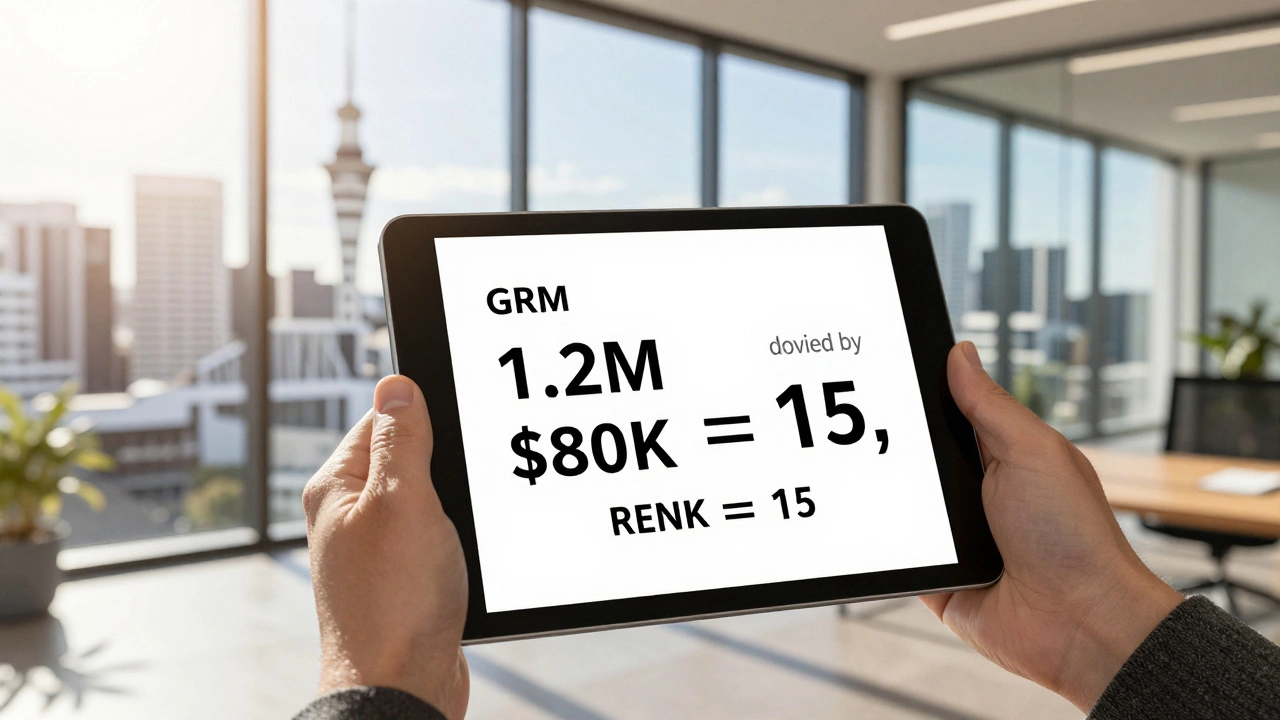
Let’s say you’re looking at a small office building in Auckland. It’s listed for $1.2 million. The tenants pay $80,000 a year in rent. Divide 1,200,000 by 80,000, and you get a GRM of 15. That means, at current rent levels, it would take 15 years of gross income to cover the purchase price.
Simple? Yes. Powerful? Absolutely.
Why GRM Matters More Than You Think
Most buyers get caught up in square footage, location, or how "nice" the lobby looks. But GRM cuts through the noise. It’s not about aesthetics-it’s about cash flow. A property with a lower GRM is generally a better deal, because it takes fewer years of rent to pay off the price. A GRM of 10 means you’re recovering your investment faster than a GRM of 20.
Here’s a real example from Auckland’s commercial market in early 2026:
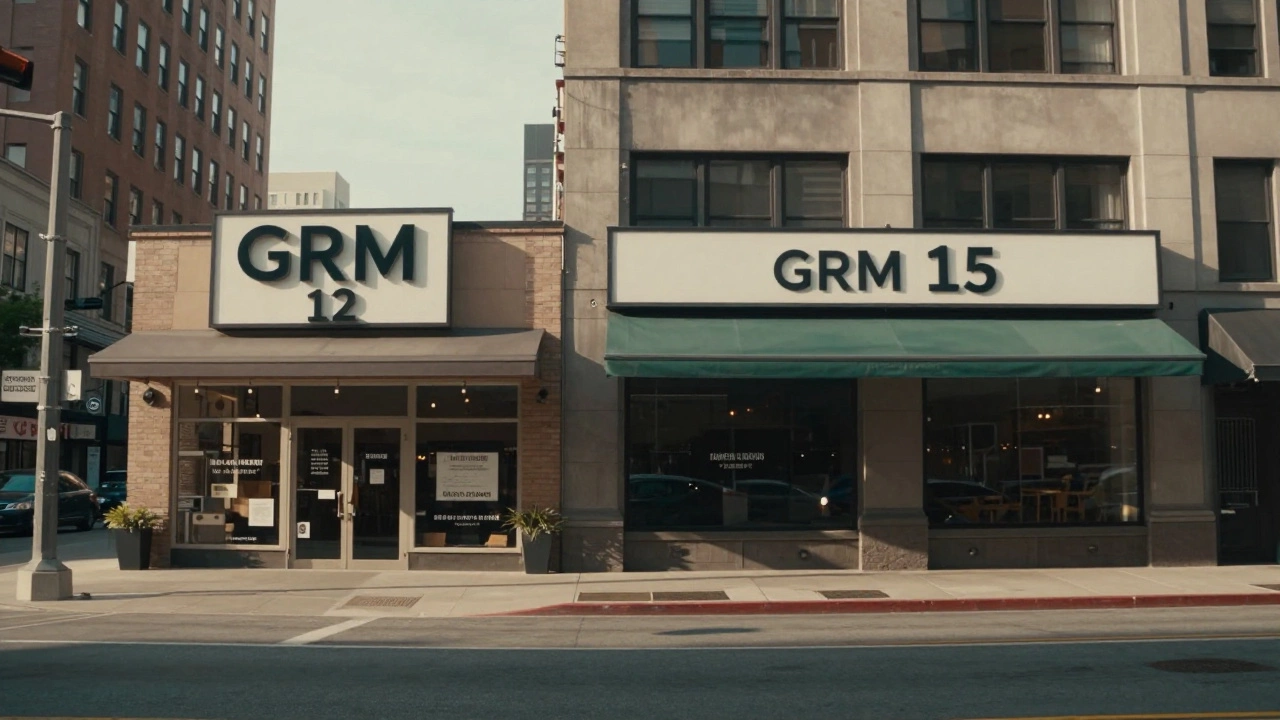
- Property A: $900,000 price, $75,000 annual rent → GRM = 12
- Property B: $1.5 million price, $100,000 annual rent → GRM = 15
Even though Property B is bringing in more rent, Property A has a lower GRM. That means, all else being equal, Property A is more efficient at turning rent into equity. It’s not necessarily "better," but it’s more valuable on a pure income-to-price basis.
What’s a Good GRM for Commercial Property?
There’s no universal "good" number-it depends on location, property type, and market conditions. But here’s what’s typical in New Zealand as of early 2026:
- Office buildings: GRM 10-16
- Retail strips (small shopping centers): GRM 12-18
- Industrial warehouses: GRM 10-14
- Mixed-use buildings: GRM 13-20
GRM below 10 is rare and usually means the property is either undervalued, in a booming area, or has major issues (like a tenant about to leave). GRM above 20 often signals overpricing or low rental demand. If you see a property with a GRM of 25 in Auckland’s CBD, ask why. There’s usually a reason.
What GRM Doesn’t Tell You
GRM is fast, but it’s not complete. It ignores everything that happens after the rent check clears the bank. No property taxes. No insurance. No maintenance. No vacancies. No management fees. That’s why GRM is best used as a first filter-not the final decision.
Think of it like checking a car’s mileage before buying. You don’t know if the engine’s worn out, but if it’s got 300,000 km on the clock, you know you’ve got work ahead.
For example, a warehouse with a GRM of 11 might look great. But if it’s got a single tenant with a lease expiring in 6 months and no backup tenants lined up, your "income" could drop to zero. GRM doesn’t warn you about that. That’s where net operating income (NOI) and cap rates come in later.
How to Use GRM Like a Pro
Here’s how to make GRM work for you:
- Compare apples to apples. Only use GRM to compare similar property types in the same area. Don’t compare a retail strip to a warehouse just because both have tenants.
- Check trends. Is the local GRM rising? That might mean prices are overheating. Is it falling? Maybe bargains are appearing.
- Use it early. Run GRM on every property you consider. If it’s outside the normal range for that type, dig deeper. Don’t waste time on properties with GRMs that don’t make sense.
- Combine it with rent growth. If rents in the area have been increasing 4% a year for the last five years, a GRM of 16 today might be a steal. If rents are flat or falling, even a low GRM could be risky.
One investor I know in Henderson bought a small retail center with a GRM of 14.5. He didn’t just accept the number-he looked at the lease terms. Three of the four tenants had 5-year leases with 3% annual increases. That meant in five years, his rental income would jump 15%. His GRM dropped to 12.4 automatically. He didn’t need to raise rent-he just waited.

GRM vs. Cap Rate: Which One Should You Use?
People confuse GRM and cap rate all the time. They’re related, but different.
GRM uses gross rent. Cap rate uses net operating income (NOI)-that’s rent minus all expenses. Cap rate gives you a more accurate picture of profitability. But it takes more data to calculate.
GRM: Price ÷ Gross Rent
Cap Rate: NOI ÷ Price
Here’s the trade-off:
- GRM is fast. You can use it on listings without knowing expenses.
- Cap Rate is accurate. You need to know maintenance, taxes, insurance, and vacancies.
Use GRM to screen. Use cap rate to decide. A property with a GRM of 13 might have a cap rate of 6% if expenses are high-or 8% if they’re low. That’s a huge difference in returns.
Real-World Pitfalls to Avoid
Here are three mistakes people make with GRM:
- Using outdated rent data. A listing says "$100,000 annual rent," but the last lease renewal was 3 years ago. Current market rent is $120,000. The GRM looks high, but it’s misleading. Always verify current income.
- Ignoring vacancy. A property is 90% occupied. The seller says "$100,000 rent." But if you assume 100% occupancy, you’re overestimating income by 10%. That makes the GRM look 10% better than it is.
- Comparing across cities. A GRM of 15 in Auckland might be normal. In Tauranga, it could be 22. Don’t assume national averages apply locally.
Always ask for the last 12 months of rent rolls. Don’t trust the listing. Go straight to the source.
Final Thought: GRM Is Your First Filter
GRM won’t tell you if a property is a great investment. But it will tell you if it’s worth looking at. If the number doesn’t make sense, walk away. If it’s in the right range, then dig into leases, tenants, and expenses. That’s where the real work begins.
In commercial real estate, speed matters. You’ll be looking at dozens of properties. GRM is your shortcut. Use it right, and you’ll skip the bad deals before you even step inside.
Is GRM the same as cap rate?
No. GRM (Gross Rent Multiplier) divides the property price by gross annual rent. Cap rate divides net operating income (rent minus expenses) by price. GRM is simpler and faster, but cap rate gives a more accurate picture of profit because it accounts for costs like taxes, insurance, and maintenance.
What’s a normal GRM for commercial property in New Zealand?
As of early 2026, typical GRMs in New Zealand are: office buildings (10-16), retail strips (12-18), industrial warehouses (10-14), and mixed-use buildings (13-20). These vary by location-Auckland and Wellington tend to have lower GRMs than smaller cities due to higher demand and rental stability.
Can GRM be used for residential properties?
Technically, yes, but it’s rarely used. Residential buyers usually focus on price-to-rent ratios or cap rates. GRM is designed for commercial properties with multiple tenants and longer leases. For single-family homes, it’s not as reliable because vacancy and turnover are higher.
Why is a lower GRM better?
A lower GRM means you’re paying less for each dollar of rent. If Property A has a GRM of 12 and Property B has a GRM of 18, Property A will take 6 fewer years to pay off based on rent alone-assuming everything else is equal. Lower GRM = faster payback = better value.
Should I only buy properties with a GRM under 15?
Not necessarily. A GRM under 15 is generally strong, but context matters. A property with a GRM of 16 might be in a growing area with rising rents. A GRM of 12 in a declining suburb could be a trap. Always combine GRM with tenant quality, lease length, and local market trends.