Understanding Villa House Sizes: A Practical Guide to Dimensions and Layouts
Villa Size & Category Estimator
Villa Dimension Analyzer
Estimate actual usable space and classify your property
Analysis Results
Enter dimensions on the left to see the detailed size analysis.
Quick Summary: What to Know About Villa Sizes
- Small villas usually range from 1,500 to 2,500 square feet.
- Medium-sized luxury villas typically sit between 3,000 and 6,000 square feet.
- Estate-level villas often exceed 10,000 square feet.
- The "size" includes not just bedrooms, but expansive living areas and outdoor integration.
Defining the Villa Concept
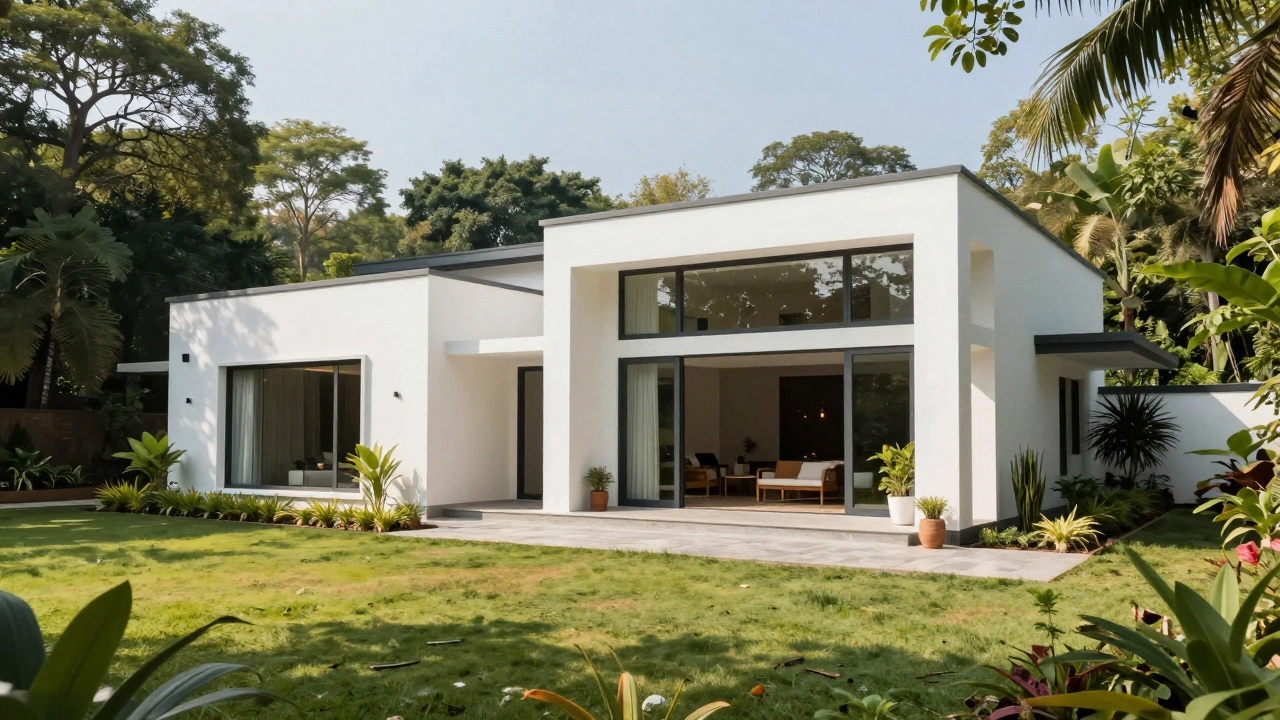
Before we talk numbers, we need to define what we're actually looking at. In modern real estate, Villa is a high-end residential dwelling, usually detached, that emphasizes privacy, luxury, and a strong connection to the surrounding landscape. Unlike a standard suburban house, a villa isn't just about the interior space; it's about the relationship between the building and the land. If you have a 3,000 square foot house but it's squeezed between two other buildings with no yard, it's not a villa-it's just a large house.
When you're browsing Villas for Sale, you'll notice that the size is often split into "built-up area" and "plot area." The built-up area is the actual footprint of the house, while the plot area is the total land the house sits on. In luxury markets, a common rule of thumb is that the plot should be at least three to five times the size of the house's footprint to maintain that essential feeling of seclusion.
Sizing by Category: From Cozy to Colossal
To get a better grip on villa house size, it helps to break them down into tiers. Most developers and architects categorize them based on the target demographic and the intended use of the property.
Small villas, often referred to as "boutique villas," usually fall between 1,500 and 2,500 square feet. These are popular for retirees or small families. You'll typically find 2 to 3 bedrooms, a compact open-plan kitchen, and a modest terrace. The focus here is on efficiency and high-end finishes rather than sheer volume. Imagine a sleek, modern unit in a gated community where the shared amenities make up for the smaller private footprint.
Medium villas are the "sweet spot" for most buyers, ranging from 3,000 to 6,000 square feet. This is where you start seeing the hallmarks of true luxury. You'll likely have 4 to 5 bedrooms, each with its own En-suite Bathroom, a dedicated home office, and a separate dining room. At this size, the layout usually shifts to a multi-story design to maximize the garden space.
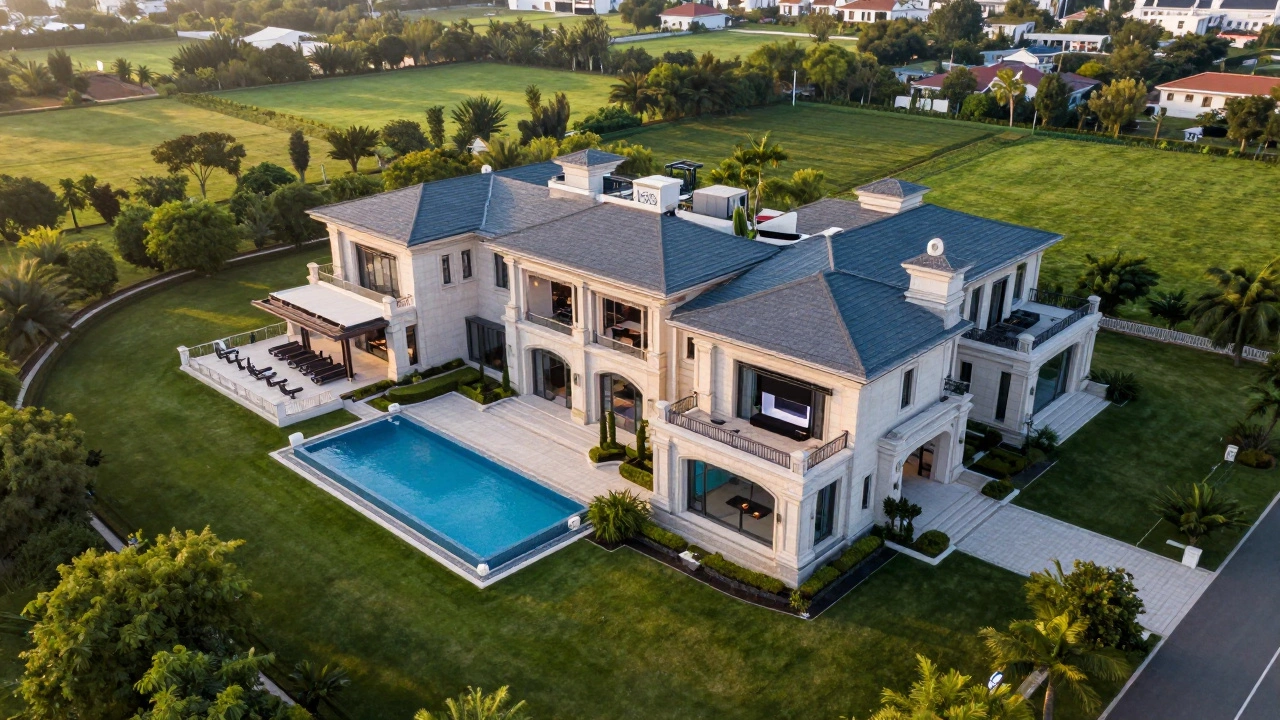
Then there are the mega-villas or estates. These start at 10,000 square feet and can go up to 50,000 square feet or more. At this scale, the house becomes a complex of zones. You aren't just looking at bedrooms; you're looking at cinema rooms, gym wings, wine cellars, and staff quarters. The size is less about "living space" and more about "lifestyle facilities."
| Villa Tier | Typical Square Footage | Average Bedroom Count | Key Features |
|---|---|---|---|
| Small/Boutique | 1,500 - 2,500 sq ft | 2 - 3 | Open-plan living, small patio |
| Medium/Family | 3,000 - 6,000 sq ft | 4 - 5 | Guest suite, dedicated office, pool |
| Large/Estate | 10,000+ sq ft | 6+ | Home cinema, gym, staff quarters |
The Layout Logic: Where Does the Space Go?
If you're looking at a floor plan, don't just look at the total number. How that space is distributed tells you more about the quality of life than the total square footage. In a well-designed villa, there is a clear separation between "public" and "private" zones. This is a core tenet of Residential Architecture.
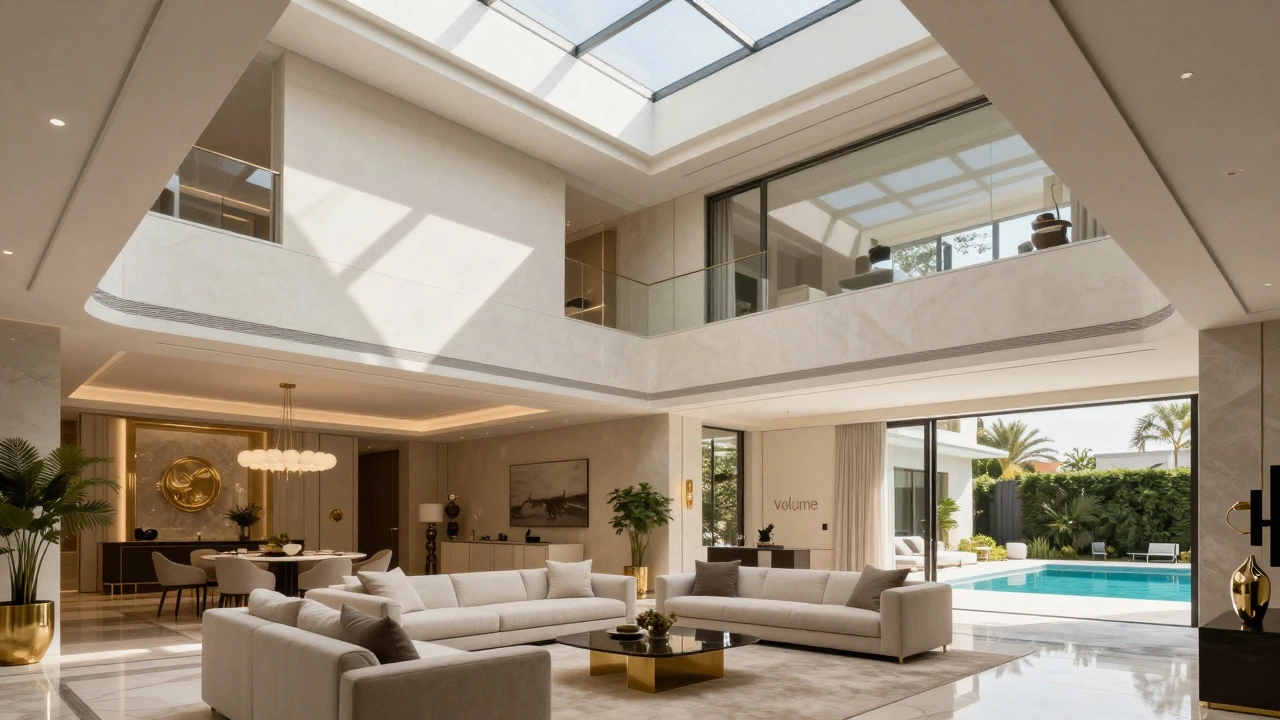
The public zone includes the foyer, the grand living room, and the dining area. In a luxury villa, the living room is often double-height, meaning the ceiling is twice as high as a normal room. While this adds to the "volume" of the house, it doesn't actually add to the square footage on a 2D map, but it makes the home feel significantly larger and more breathable.
The private zone consists of the bedrooms and family lounges. A common mistake in mid-sized villas is placing the master suite too close to the main entertainment area. High-end designs usually place the master wing on a separate floor or a distant wing of the house to ensure acoustic privacy. If you see a floor plan where the bedroom is just a door away from the kitchen, that's a red flag for a property marketed as a "luxury villa."
Then there's the "service zone." This includes the laundry room, pantry, and sometimes a separate kitchen for catering. In estates over 8,000 square feet, the service zone is often tucked away with its own separate entrance so that staff can move through the house without crossing the main living areas.
Outdoor Spaces and the "Invisible" Square Footage
One of the biggest traps when asking "how big is a villa?" is ignoring the outdoor areas. A villa is defined by its integration with nature. Many buyers overlook the Veranda, terraces, and decks, but these are essentially outdoor rooms. If a villa has 3,000 square feet of indoor space but another 2,000 square feet of covered terraces, your usable living area is actually 5,000 square feet.
Consider the Swimming Pool area. A standard luxury pool is about 15x30 feet, but the surrounding deck can add another 1,000 square feet of entertainment space. In tropical climates, these outdoor zones are where 70% of the daily activity happens, making them just as important as the living room.
Don't forget the landscaping. A villa on a half-acre plot feels vastly different from a villa on a two-acre plot, even if the house size is identical. The "perceived size" of a villa is heavily influenced by the sightlines from the windows. If you can see a wide, manicured garden, the interior spaces feel more expansive.
Common Pitfalls in Size Estimations
When reading listing descriptions, be wary of "gross floor area" versus "net internal area." The gross area includes the thickness of the walls and the stairwells. The net internal area is the actual carpeted space you can walk on. The difference can be as much as 10-15%. If a developer says a villa is 4,000 square feet, you might only have 3,400 square feet of actual usable room.
Another tricky area is the basement. Some regions include the basement in the total square footage, while others list it as "additional space." A basement is great for a gym or a wine cellar, but it doesn't provide the same light and air as a main-floor room. If you're comparing two villas and one has a larger total size but half of it is underground, the smaller house with more ground-level space is often the better investment.
Lastly, watch out for "loft' areas. These are often counted in the total square footage even if the ceiling is too low to stand up in for part of the room. Always ask for the ceiling heights in any area listed as a bonus room or attic conversion.
Is a 2,000 square foot house considered a villa?
Yes, provided it meets the other criteria of a villa. Size isn't the only factor; it's about the architecture and the land. A 2,000 square foot detached home with a private garden, high-end finishes, and an open layout can certainly be classified as a boutique villa.
What is the ideal size for a family villa?
For most families, a villa between 3,500 and 5,000 square feet is ideal. This typically allows for 4 bedrooms, a home office, and enough common space to prevent the house from feeling crowded, without becoming a burden to maintain or clean.
Does the garage count toward the villa's square footage?
In most official real estate measurements, the garage is listed separately from the "living area" or "heated square footage." However, some developers include it in the total "built-up area." Always check if the number includes non-living spaces like garages and sheds.
How does villa size affect the price?
While square footage is a major driver, the price per square foot usually drops as the house gets massive (the law of diminishing returns). However, the total cost increases. More importantly, the quality of the space-such as ceiling height and the view-can often make a smaller villa more expensive than a larger, poorly designed one.
What should I look for in a villa floor plan?
Look for the flow between the kitchen and the outdoor dining area, the distance between the master bedroom and the noise of the living room, and the amount of natural light. Ensure there are enough "transition spaces" (hallways and foyers) so the home doesn't feel like a series of boxes.
Next Steps for Potential Buyers
If you're currently browsing for a new home, start by defining your "must-have" room count rather than a specific square footage. A 4,000 square foot villa with a bad layout can feel smaller than a 3,000 square foot villa with high ceilings and open vistas.
When you go for a viewing, bring a laser measure or a simple measuring tape. Check the width of the hallways-narrow halls can make a large villa feel cramped. Also, spend time in the outdoor spaces to see if they feel like extensions of the home or just isolated patches of grass.
If you're undecided between two sizes, think about your long-term plan. A smaller boutique villa is much easier to rent out as a vacation home, while a large estate is better for multi-generational living or hosting frequent events. Match the size to your actual lifestyle, not the image of luxury you see in magazines.