Virginia Landlord Rights: Terminating Month-to-Month Leases Without Cause

Virginia Landlord Notice Calculator
Enter your rent due date and the date you received the termination notice to check its validity under Virginia Code § 55.1-1253.
Notice Analysis
Current Rental Period Ends
--
Latest Valid Notice Date
--
Your Move-Out Deadline
--
You are generally required to vacate by this date.You signed a month-to-month lease in Richmond or Fairfax, thinking you had the freedom to leave whenever. But what happens when your landlord decides they want you out? They don't need a reason. In Virginia, under specific conditions, a landlord can terminate your tenancy without citing any fault on your part. This isn't a loophole; it's the law. But there are strict rules about timing and notice that protect you from being kicked out overnight.
Most tenants assume that if they pay rent on time and keep the place clean, they're safe until the lease ends. With a fixed-term lease, that's true. With a month-to-month agreement, the dynamic shifts. The key isn't whether you did something wrong-it's whether the landlord followed the correct legal procedure to end the relationship. If they missed a step, their notice might be invalid. Let's break down exactly how this works so you know where you stand.
The Legal Basis for No-Cause Termination
Virginia Residential Landlord and Tenant Act (VRLTA) is the primary statute governing most rental relationships in the state. It explicitly allows landlords to terminate a periodic tenancy-like a month-to-month lease-without cause. This means they don't have to prove you broke the lease, damaged property, or failed to pay rent. They simply choose not to renew the agreement for the next period.
This right stems from the nature of a periodic tenancy. Unlike a one-year lease, which locks both parties in for a set duration, a month-to-month arrangement renews automatically every month unless one party gives notice to stop it. Think of it as an open-ended subscription. Either side can cancel, but they must follow the cancellation protocol defined by state law. For landlords, this provides flexibility to reclaim the property for sale, renovation, or personal use without fighting through a lengthy eviction trial based on tenant misconduct.
Notice Requirements: The 30-Day Rule
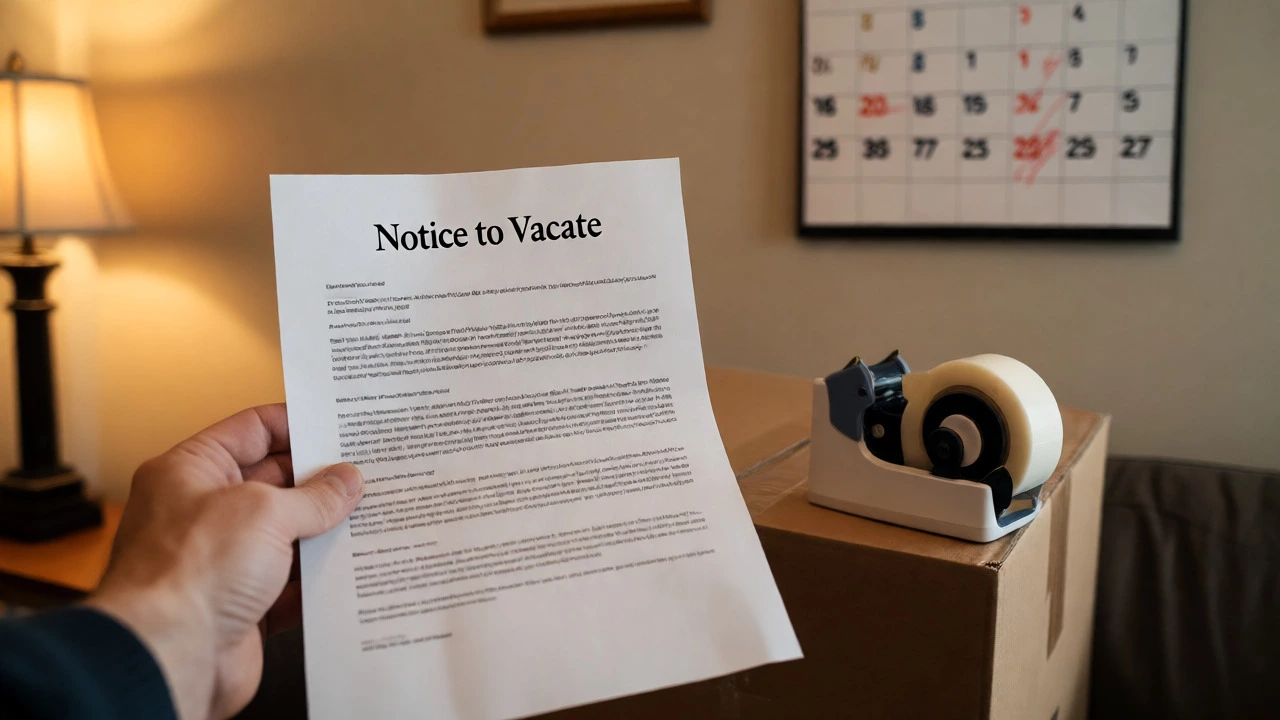
The most critical factor in these disputes is the notice period. Under Virginia law, specifically Code § 55.1-1253, a landlord must provide written notice at least 30 days before the end of the current rental period. This is non-negotiable. If your rent is due on the first of the month, and the landlord wants you out by November 1st, they must deliver the notice by October 1st. Not October 2nd. Not "around" October 1st. By October 1st.
Why does this matter? Because many landlords make mistakes here. They might send an email on October 5th saying, "Please vacate by November 1st." That notice is defective. It doesn't give you the full 30 days required before the term ends. If you stay past November 1st because the notice was late, the landlord cannot immediately file for unlawful detainer (eviction). They would likely have to wait another cycle or serve a new, correct notice. Always check the date on the notice against the day your rent is due.
When Can a Landlord NOT Use No-Cause Termination?
While the power seems absolute, it has limits. A landlord cannot use a no-cause termination to mask illegal retaliation or discrimination. If you recently complained to a local housing authority about code violations, and two weeks later you get a 30-day notice, that raises red flags. Virginia law protects tenants from retaliatory actions taken within six months of a good-faith complaint or assertion of rights.
Additionally, federal and state fair housing laws prohibit termination based on protected classes. These include race, color, religion, sex, national origin, familial status, and disability. If a landlord suddenly terminates your month-to-month lease after you announce you're pregnant or install a wheelchair ramp, you may have grounds to challenge the termination as discriminatory rather than purely contractual.
Exceptions for Fixed-Term Lease Conversions
Sometimes, a landlord will try to convert a month-to-month tenancy into a fixed-term lease with different terms, effectively forcing a choice: sign the new lease or leave. While they can't force you to sign, they can condition the continuation of the tenancy on accepting new terms. However, they still must provide the proper 30-day notice if they intend to terminate the existing month-to-month arrangement entirely.
Be wary of verbal agreements. If your original lease expired and you kept paying rent while the landlord kept accepting it, you likely transitioned to a month-to-month status by operation of law. Even if you never signed a new paper, the VRLTA applies. Don't let a landlord claim you're "just squatting" because you didn't sign a renewal. You have the same rights as someone who signed a fresh month-to-month contract.
Practical Steps for Tenants Receiving Notice
If you receive a 30-day notice, don't panic, but don't ignore it either. Here is a checklist to ensure your rights are protected:
- Verify the Date: Count back 30 days from the end of your current rental period. Did the notice arrive on or before that date?
- Check the Method: Was it delivered personally, left at the residence, or sent via certified mail? Email alone may not suffice depending on your original lease terms regarding notice delivery.
- Document Everything: Keep a copy of the notice. Note the date you received it. Take photos of the condition of the unit now, before you start moving out, to prevent false damage claims later.
- Communicate in Writing: If you dispute the validity of the notice, reply in writing. State clearly why you believe it is insufficient (e.g., "Notice received on Oct 5th for Nov 1st move-out is less than 30 days").

Comparison: Virginia vs. Other States
Virginia's approach is relatively landlord-friendly compared to states with stricter rent control or just-cause eviction laws. In California or New York, for example, terminating a long-term tenant often requires proving specific causes like owner occupancy or substantial renovations, even for month-to-month situations. Virginia generally sticks to the contract terms.
| State | Notice Period for Month-to-Month | No-Cause Allowed? | Rent Control Impact |
|---|---|---|---|
| Virginia | 30 Days | Yes | None statewide |
| California | 30-60 Days* | Limited (Just Cause required in many areas) | High in major cities |
| Texas | 30 Days | Yes | None statewide |
| New York | 30-90 Days* | High in NYC |
*Note: Longer notices often apply to tenants residing in the unit for more than one year.
Frequently Asked Questions
Does a landlord need to give a reason for ending a month-to-month lease in Virginia?
No, under the Virginia Residential Landlord and Tenant Act, a landlord does not need to provide a reason (cause) to terminate a month-to-month tenancy. They only need to provide the legally required written notice, which is typically 30 days prior to the end of the rental period.
How many days notice does a Virginia landlord have to give?
A landlord must provide written notice at least 30 days before the end of the current rental period. For example, if your rent is due on the 1st of the month, the notice must be delivered by the 1st of the preceding month to end the tenancy at the end of the current month.
Can a landlord change the terms of a month-to-month lease instead of terminating it?
Yes, a landlord can propose new terms, such as a rent increase, by providing written notice. In Virginia, a rent increase usually requires 30 days' notice. If you do not agree to the new terms, you have the option to move out, effectively treating the proposed change as a termination of the previous agreement.
What if I think the termination is retaliatory?
If you made a good-faith complaint about housing conditions or asserted your rights under the VRLTA within the last six months, and the landlord issues a termination notice shortly after, you may argue retaliation. You would need to demonstrate a causal link between your complaint and the notice, potentially requiring legal advice or mediation.
Is email sufficient for giving notice?
It depends on your original lease agreement. Many leases specify how notices must be delivered (e.g., certified mail, hand delivery). If the lease says "written notice" without specifying method, email might be acceptable if both parties have used it for official communications previously. However, certified mail or hand delivery with a receipt is safer and less likely to be disputed.
Final Thoughts on Navigating Your Exit
Living on a month-to-month basis in Virginia offers flexibility, but it comes with the risk of sudden displacement. The power balance leans slightly toward the landlord because they hold the keys to the door. But the law demands precision. A sloppy notice is your shield. Read the dates, check the delivery method, and know your rights against retaliation. If the paperwork is clean, plan your move efficiently. If it's messy, you might buy yourself extra time to find a new home without stress.