What Does NOI Mean in Business? A Guide to Net Operating Income for Commercial Property

Net Operating Income (NOI) Calculator
Property Financial Data
Gross Operating Income
Operating Expenses
Valuation Metrics (Optional)
What's Excluded from NOI?
Quick Reference
NOI = (Rental Income + Other Income + Recoveries) × (1 - Vacancy Rate) - Total Operating Expenses
Calculation Results
You are looking at a listing for a warehouse in Auckland. The agent says it generates $200,000 a year. Sounds good, right? But then you see the expenses listed: insurance, taxes, maintenance, and management fees totaling $150,000. Suddenly, that $200,000 figure looks very different. This is where NOI comes into play. It strips away the noise of financing and accounting tricks to show you the raw profitability of the asset itself.
In commercial real estate, Net Operating Income (NOI) is the golden metric. It tells you exactly how much cash a property produces from its normal operations before any debt service or income taxes are paid. If you are buying, selling, or managing commercial property, understanding NOI is not just helpful; it is essential. Without it, you are guessing.
The Core Definition of NOI
Net Operating Income represents the total revenue generated by a property minus all reasonable and necessary operating expenses. It is a snapshot of the property's financial health independent of how it was bought or who owns it. Whether you pay cash, take a massive mortgage, or use complex leverage, the NOI remains the same because it ignores financing costs.
Think of NOI as the engine’s horsepower. It doesn't matter if you drive a Ferrari or a Ford truck; the engine's power output is a fixed characteristic of the machine. In real estate, the "engine" is the property's ability to generate rent and cover its own bills. Investors use this number to compare apples to apples across different markets and property types.
How to Calculate NOI: The Formula
Calculating NOI is straightforward arithmetic, but getting the inputs right requires discipline. The basic formula is:
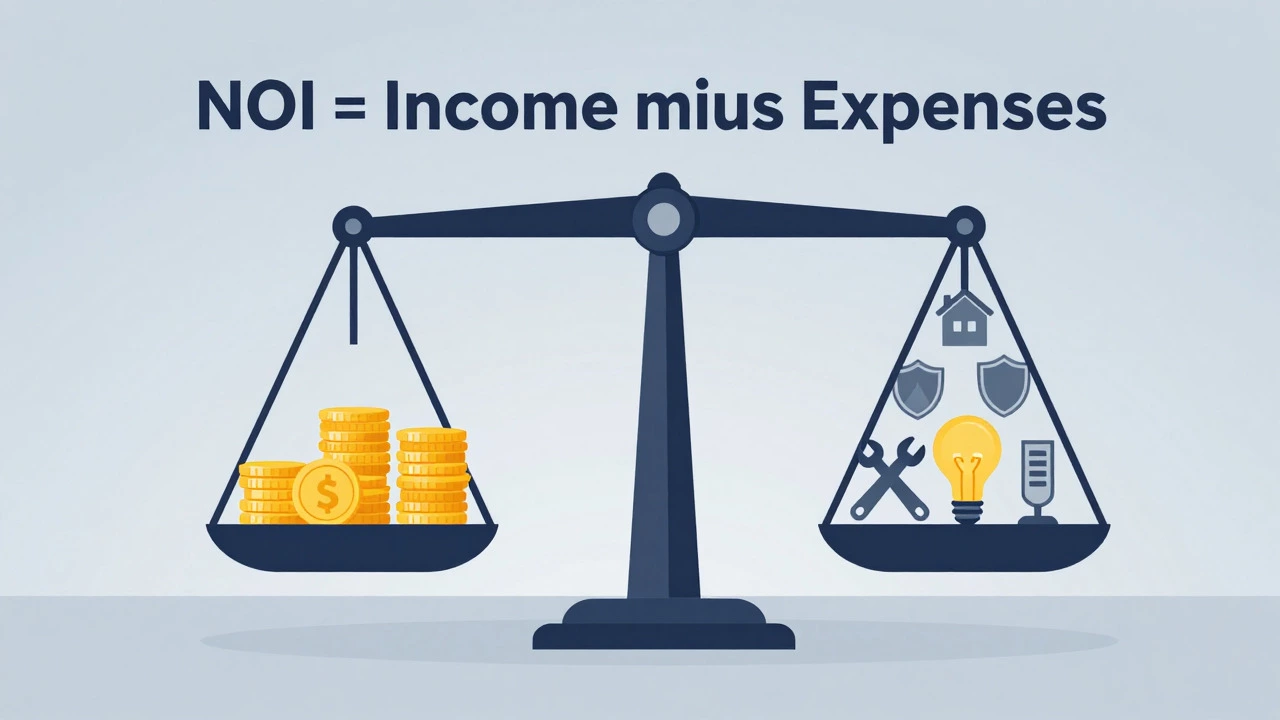
NOI = Gross Operating Income - Operating Expenses
To get an accurate figure, you need to break down both sides of that equation carefully.
Gross Operating Income (GOI)
This is not just the rent on the lease. It includes all money coming into the building from regular operations. For a multi-tenant office building in Auckland, this might include:
- Rental Income: Base rent paid by tenants.
- Other Income: Parking fees, vending machine commissions, signage leases, or laundry facilities.
- Recoveries: In many commercial leases, tenants pay a portion of the operating costs (CAM charges). These are included in GOI and then offset against expenses later, or they can be added directly to income depending on your accounting method. Consistency is key.
Operating Expenses (OE)
These are the costs required to keep the lights on and the doors open. Crucially, these must be *operating* costs, not capital improvements. Common expenses include:
- Property Taxes: Rates and local government levies.
- Insurance: Liability and property damage coverage.
- Maintenance: Routine repairs like fixing a leaky faucet or repainting hallways.
- Management Fees: If you hire a property manager, their fee (usually 4-6% of gross income) goes here.
- Utilities: Water, electricity, and gas if not billed directly to tenants.
- Landscape and Janitorial Services: Keeping the exterior and interior clean.
What Is NOT Included in NOI?
This is where most beginners make costly mistakes. Several major financial items are explicitly excluded from the NOI calculation. If you subtract these, you are no longer calculating NOI; you are calculating something else entirely, often leading to undervalued assets.
| Expense Type | Why It Is Excluded | Where It Belongs Instead |
|---|---|---|
| Mortgage Payments (Debt Service) | Financing is personal to the owner, not the property. One investor might pay cash; another might have high interest rates. NOI isolates the asset's performance. | Cash Flow Analysis (Net Cash Flow) |
| Income Taxes | Tax situations vary wildly based on individual tax brackets, deductions, and residency status. NOI is pre-tax. | Personal Tax Return / After-Tax Cash Flow |
| Depreciation & Amortization | These are non-cash accounting entries. No actual money leaves your bank account for depreciation. | Accounting Profitability (EBITDA) |
| Capital Expenditures (CapEx) | Major replacements like a new roof or HVAC system add long-term value. They are investments, not routine operations. | CapEx Reserve / Equity Yield Analysis |
| Leasing Commissions | Paying a broker to find a tenant is a one-time acquisition cost, not a recurring operational expense. | Acquisition Costs / Cash-on-Cash Return |
For example, if you buy a retail shop in Ponsonby and spend $50,000 replacing the entire air conditioning system, that $50,000 does not reduce the current year's NOI. It reduces your cash flow, but it increases the value of the asset. Mixing CapEx into NOI distorts the true operating efficiency of the building.
Why NOI Matters More Than Rent
New investors often focus solely on rental income. "It brings in $10,000 a month!" they say. But what if the property has sky-high insurance premiums due to flood risk? Or what if the landlord is responsible for all utilities in an inefficient, old building? High rent with higher expenses results in a low or negative NOI.
NOI provides a standardized benchmark. When banks lend money for commercial property in New Zealand, they look at the Debt Service Coverage Ratio (DSCR). This ratio compares NOI to annual debt payments. Lenders typically want a DSCR of at least 1.2x. This means the property’s NOI must be 20% higher than the loan payment. Without an accurate NOI, you cannot secure financing.
Furthermore, NOI is the numerator in the Capitalization Rate (Cap Rate) formula. Cap Rate = NOI / Property Value. If you overstate your NOI by including non-operating income, you inflate your perceived return and may overpay for the property. In a competitive market like Auckland, even a small error in NOI calculation can mean tens of thousands of dollars in lost equity.
Pro Forma vs. Historical NOI
When analyzing a property, you will encounter two types of NOI figures. Understanding the difference is critical for due diligence.
Historical NOI is based on past performance. You take last year’s actual income and expenses. This is factual but backward-looking. It assumes the future will look exactly like the past, which is rarely true. Vacancy rates change, rents increase, and repair costs rise.
Pro Forma NOI is a forward-looking estimate. It projects what the NOI will be once the property is stabilized under new ownership. Maybe you plan to renovate the units to charge higher rent. Maybe you plan to self-manage to cut fees. Pro Forma NOI reflects these changes. However, it is also where sellers often exaggerate. Always stress-test Pro Forma numbers against conservative vacancy assumptions and realistic expense escalations.
Common Pitfalls in NOI Calculation
Avoid these common errors to ensure your analysis holds up under scrutiny.
- Ignoring Vacancy Losses: Never assume 100% occupancy forever. Subtract a vacancy allowance (e.g., 5-10%) from potential gross income to get Effective Gross Income. This makes your NOI more realistic.
- Mixing Personal Expenses: If you live in one unit of a mixed-use building, do not count your personal internet bill as a business expense. Keep personal and business finances strictly separate.
- One-Time Repairs vs. Maintenance: Fixing a broken window is maintenance (included in NOI). Replacing all windows in the building is CapEx (excluded from NOI). The line can be blurry, so use a rule of thumb: if it extends the life of the asset significantly, it’s CapEx.
- Vague Expense Categories: Sellers might lump "miscellaneous" expenses together. Dig deeper. Ask for a breakdown. Hidden costs often hide in vague categories.
Using NOI to Make Better Investment Decisions
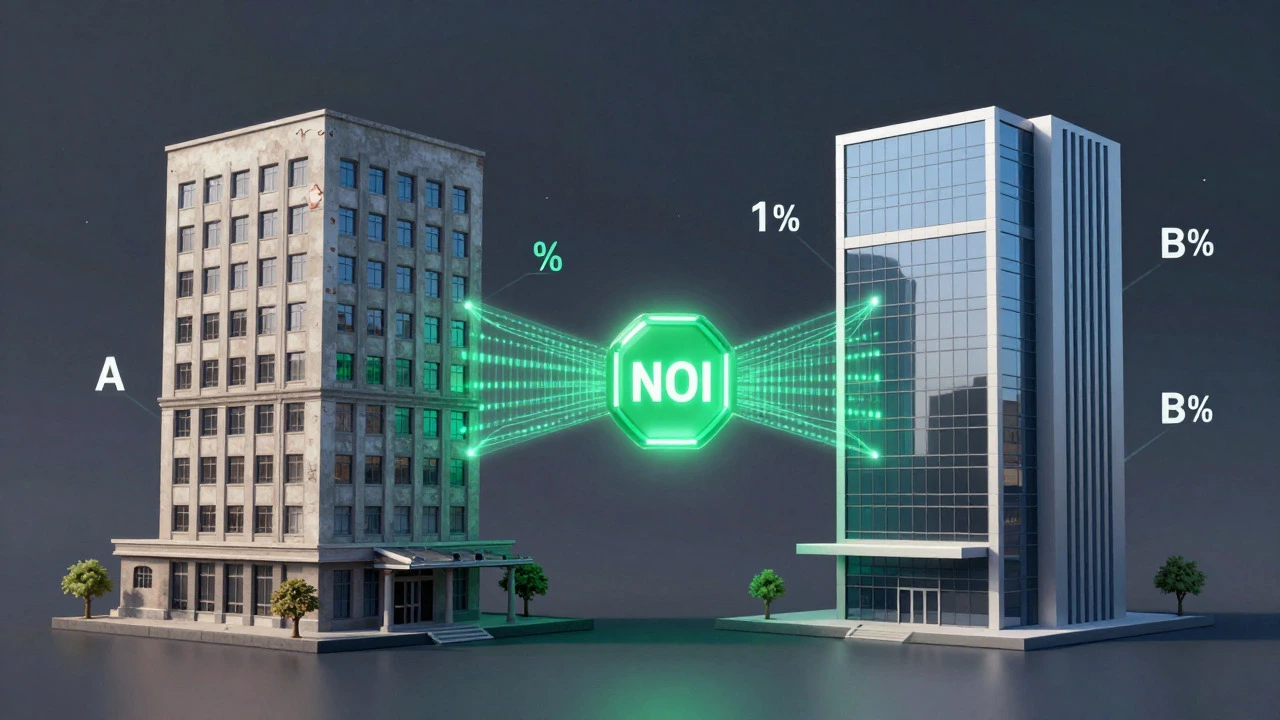
Once you have a reliable NOI figure, you can start comparing properties effectively. Let’s say you are looking at two options in the Auckland CBD. Building A has a lower purchase price but higher operating costs due to age. Building B is newer and cheaper to run but costs more upfront.
By calculating the NOI for both, you can determine which property generates more efficient cash flow relative to its value. You can then apply your target Cap Rate to see what each property is actually worth to you. If Building A has an NOI of $100,000 and your target Cap Rate is 6%, the property is worth $1.67 million. If the asking price is $1.8 million, you know immediately that the deal is too expensive, regardless of how nice the lobby looks.
NOI also helps in negotiation. If you find discrepancies in the seller’s stated NOI-perhaps they forgot to include property management fees-you can adjust your offer accordingly. Data-driven negotiations protect your downside.
Conclusion: Master the Metric
Net Operating Income is the foundation of commercial real estate analysis. It removes the variables of financing and taxation to reveal the true earning power of a property. By mastering the calculation of NOI, distinguishing between operating expenses and capital expenditures, and applying it to valuation metrics like Cap Rate, you move from guessing to knowing. In the world of commercial property, knowledge isn’t just power; it’s profit.
Is NOI the same as cash flow?
No, they are different. NOI excludes mortgage payments and income taxes. Cash flow is what is left in your pocket after paying all operating expenses, debt service, and taxes. You calculate cash flow by taking NOI and subtracting debt service and taxes.
Can NOI be negative?
Yes, NOI can be negative if operating expenses exceed the income generated by the property. This usually happens when vacancy rates are high, rents are below market value, or unexpected major repairs occur. A negative NOI indicates the property is losing money from its core operations.
Does NOI include mortgage payments?
No, NOI does not include mortgage payments. It is a measure of the property's performance independent of how it is financed. Mortgage payments are considered debt service and are subtracted from NOI to determine net cash flow.
What is a good NOI margin?
A good NOI margin varies by property type and location. Generally, an NOI margin of 60-80% is considered healthy for well-managed commercial properties. This means 60-80 cents of every dollar of income remains after operating expenses. Lower margins may indicate high operating costs or low rents.
How is NOI used to value a property?
NOI is used in the Income Approach to valuation. By dividing the NOI by the Capitalization Rate (Cap Rate), you can estimate the market value of the property. For example, if a property has an NOI of $100,000 and the market Cap Rate is 5%, the estimated value is $2,000,000.