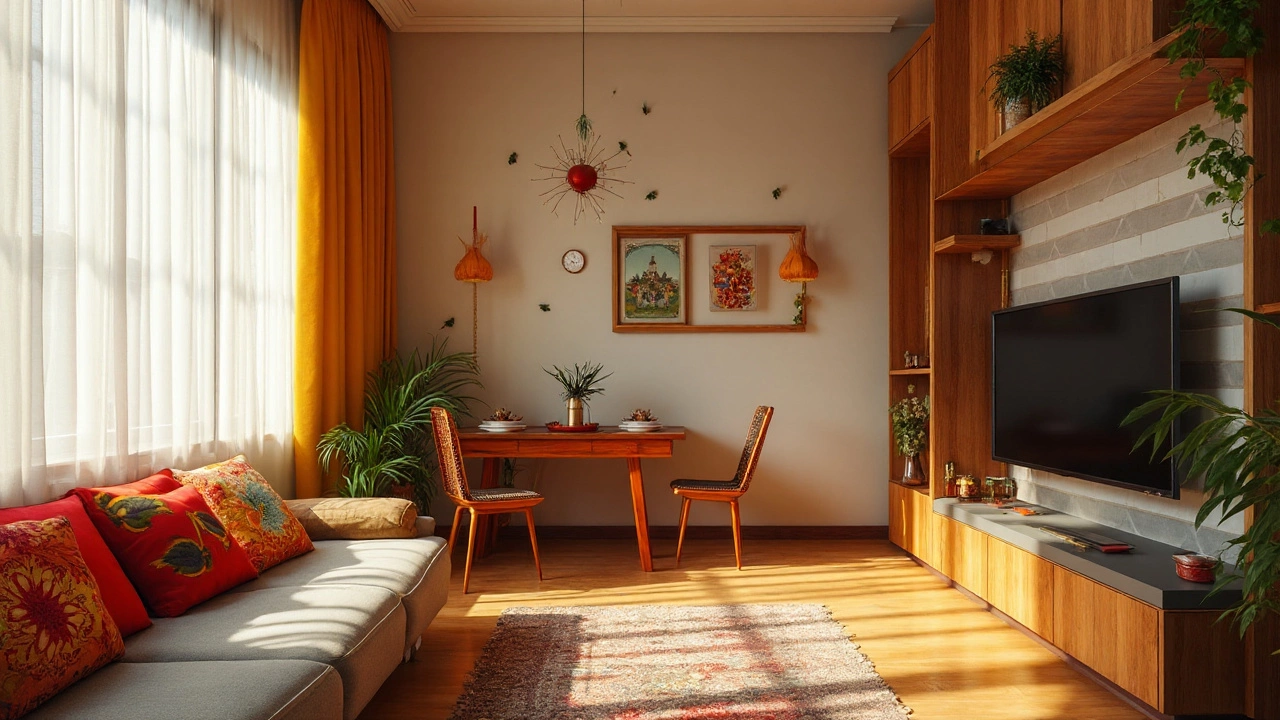
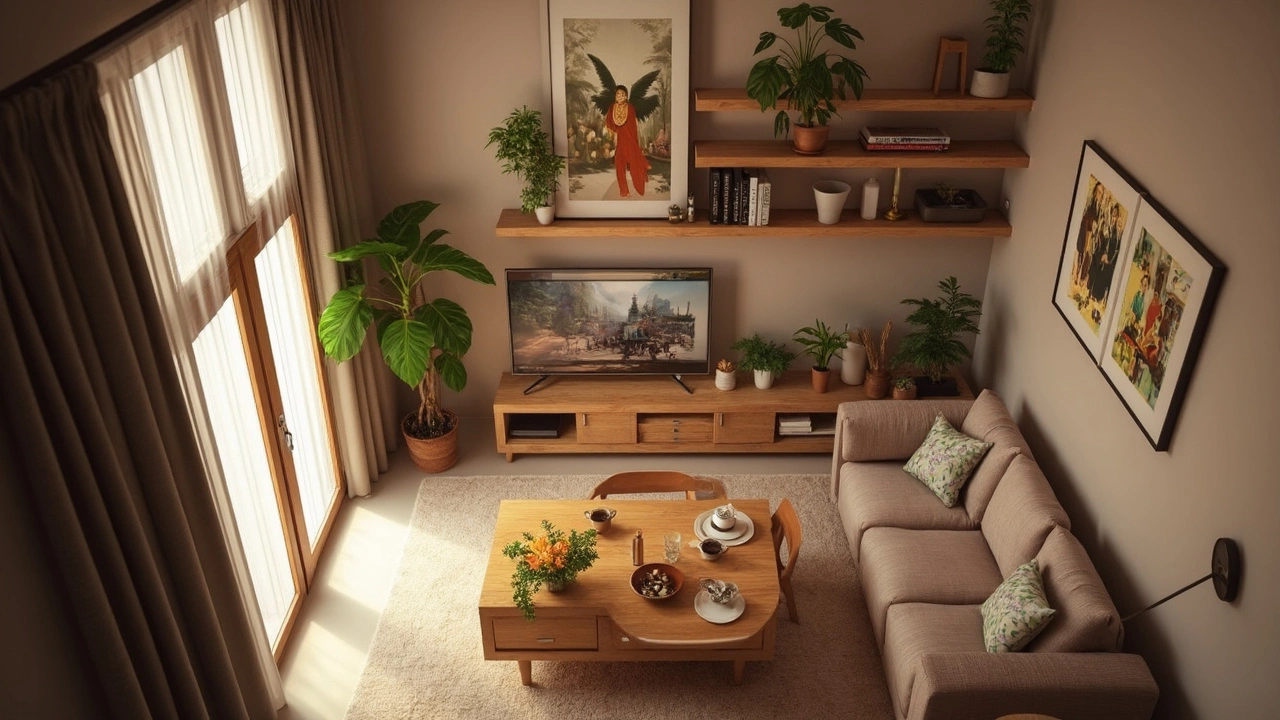
Is 500 Square Feet Too Small for 2 People? Living Small Guide
Small Space Living Feasibility Calculator
Will it fit? Compatibility Check
Evaluate your lifestyle and belongings to see if a 500 sq ft apartment is a sanctuary or a struggle for your relationship.
Your Result:
Quick Takeaways for Couples
- Physical Space: 500 sq ft is tight but doable if you prioritize multi-functional furniture.
- Psychological Space: You need designated 'zones' to avoid feeling like you're always in each other's pockets.
- Storage: Vertical space is your best friend; if you can't go wide, go up.
- Lifestyle: This works best for couples who spend a lot of time outdoors or have separate work schedules.
The Reality of the 500 Square Foot Footprint
To put this in perspective, 500 square feet is roughly the size of a large two-car garage. When you split that between two people, you're looking at about 250 square feet per person. That has to cover your sleeping area, your lounging area, your cooking space, and your bathroom. If you're coming from a suburban house, this feels like a dollhouse. If you're coming from a dorm, it feels like a palace.
The biggest challenge isn't actually the square footage-it's the flow. In a small space, a single misplaced laundry basket can block a primary walkway. You have to be intentional about how you move through the home. If the layout is a long narrow rectangle, it feels different than a square. A square often feels more spacious because it allows for more flexible zoning.
Defining Your Zones: The Secret to Sanity
The fastest way to fail at living in a small space is to let every area become a 'catch-all.' If your bed is where you eat, and your sofa is where you fold laundry, the whole apartment starts to feel like one big room of chaos. You need to establish psychological boundaries.
Start by creating a dedicated sleep zone. Even if you don't have a separate bedroom, using a Room Divider or a heavy curtain can signal to your brain that 'work time' is over and 'rest time' has begun. This is crucial for couples. When one person is reading in bed and the other is watching TV three feet away, the lack of a physical barrier can lead to friction.
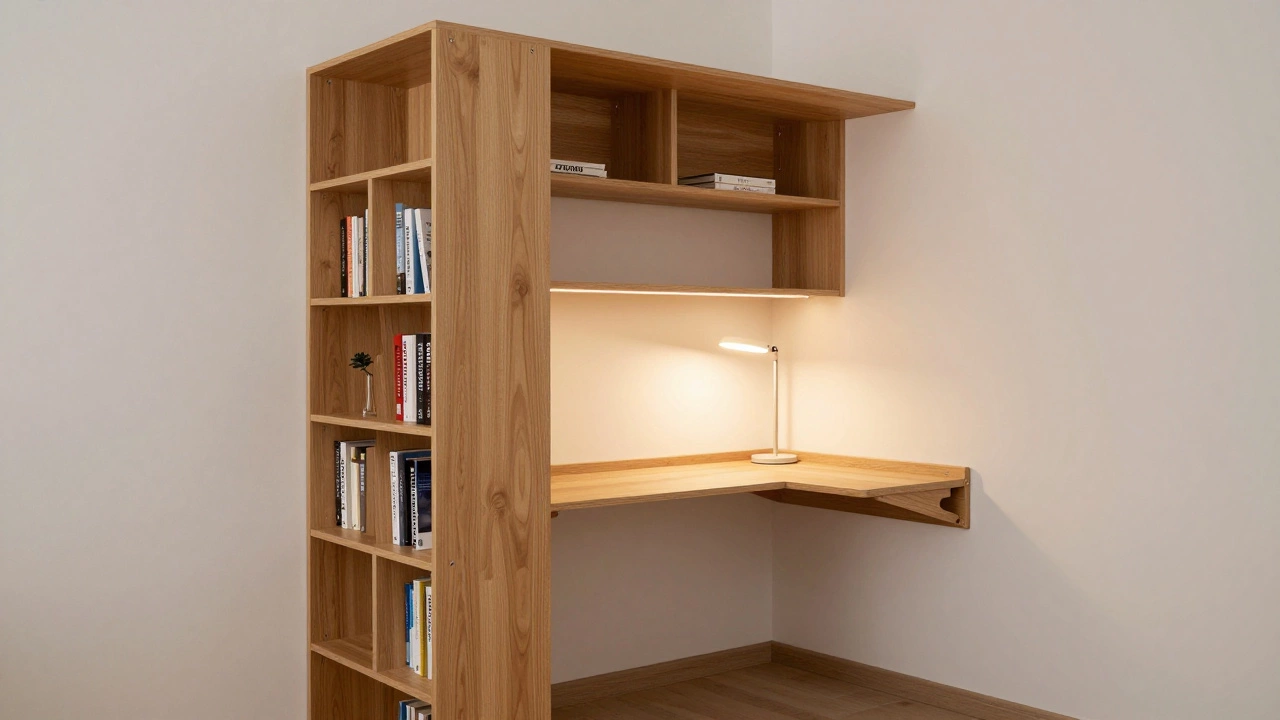
Next, look at your work-from-home setup. With the rise of remote work, the 'desk in the corner' isn't enough. Consider a wall-mounted fold-down desk. This allows you to reclaim that floor space the moment you clock out, effectively 'removing' the office from your home during your evening hours.
| Zone | Common Mistake | The Pro Move | Impact |
|---|---|---|---|
| Living Room | Buying a massive sectional sofa | Using an apartment-sized loveseat with ottomans | Opens up walking paths |
| Bedroom | Standard bed frame with no storage | Hydraulic lift bed or drawers underneath | Eliminates need for a bulky dresser |
| Kitchen | Keeping every appliance on the counter | Magnetic spice racks and hanging pot rails | Increases prep surface area |
| Dining | Full-sized dining table | Extendable bistro table or kitchen island | Flexible seating for guests |
The Storage Battle: Verticality and Hidden Gems
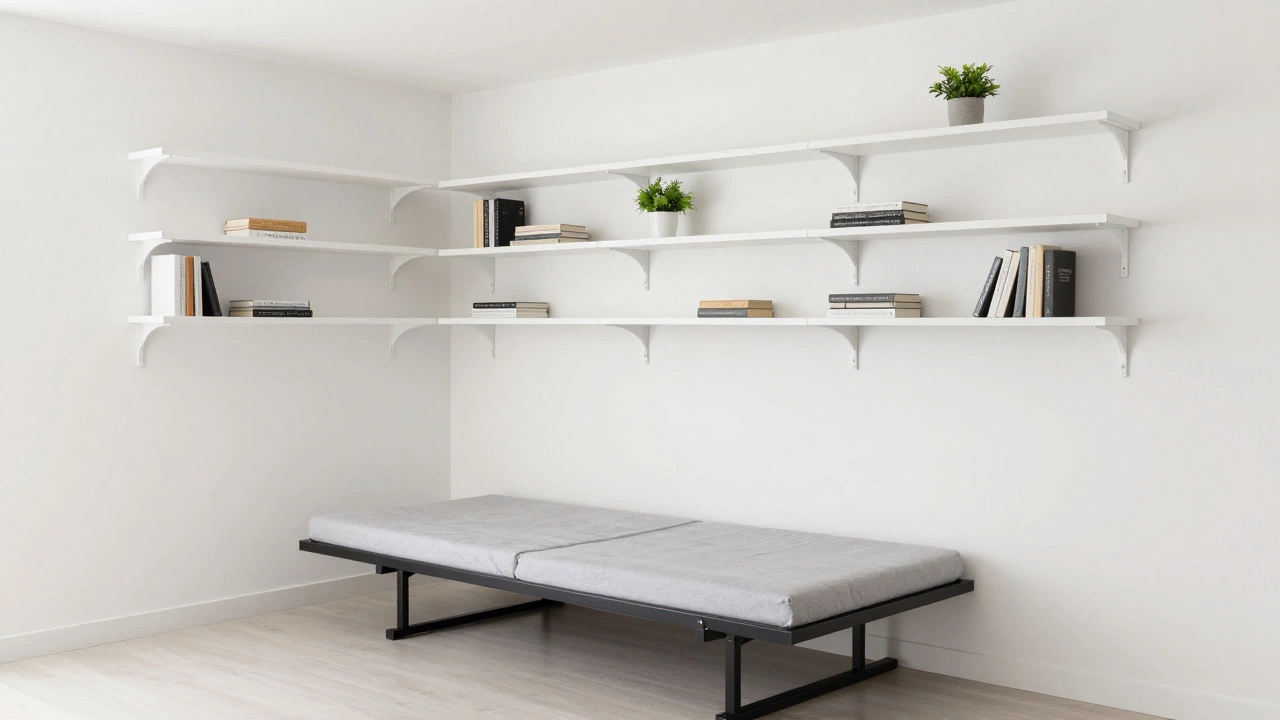
When you're fighting for every inch, you have to stop thinking about the floor and start thinking about the walls. Most people leave the top 20% of their walls empty. That's a huge waste of potential. Installing floating shelves that go all the way to the ceiling allows you to store items you only use once a year (like holiday decorations or winter coats) high up, while keeping daily essentials within reach.
You also need to embrace Dual-Purpose Furniture. An ottoman that opens for blankets, a coffee table that lifts into a desk, or a guest bed that doubles as a sofa. The goal is to ensure that every piece of furniture does at least two jobs. If a piece of furniture only serves one purpose, it has to be exceptionally valuable to your quality of life to earn its spot in a 500 sq ft flat.
Don't forget the 'dead spaces.' The area above the bathroom door or the gap between the fridge and the wall can be transformed into storage with the right shelving. Even a slim rolling pantry can hold twenty cans of food that would otherwise clutter your countertops.
Managing the Emotional Weight of Small Spaces
Living in a tight space isn't just a logistical puzzle; it's an emotional one. When you're always within arm's reach of your partner, you lose the 'missing' factor. You need to find ways to create solitude. This might mean agreeing on 'quiet hours' or simply leaving the house for a walk to get some mental distance.
Clutter is the enemy of peace in a small apartment. In a 2,000 square foot home, a pile of mail on the counter is barely noticeable. In a 500 square foot space, that same pile feels like a mountain of stress. This is why a strict 'one-in, one-out' rule is essential. If you buy a new pair of shoes, an old pair must be donated. This prevents the slow creep of belongings that eventually makes a space feel uninhabitable.
Lighting also plays a massive role in how large a space feels. Avoid the single 'big light' in the center of the room, which creates dark corners and makes the room feel smaller. Instead, use layers of lighting-floor lamps, table lamps, and LED strips under cabinets. Bright, well-lit corners push the walls back visually, making the apartment feel airier.
Is This the Right Choice for Your Relationship?
Before signing a lease on a 500 sq ft place, you and your partner need to have a very honest conversation. Are you both minimalists? If one of you is a collector of vintage records and the other has a passion for oversized gym equipment, this will not work. You'll spend more time arguing about space than enjoying each other's company.
On the flip side, there's a hidden benefit: the lower cost. Choosing an Affordable Housing option allows you to spend more on experiences. Instead of paying for a guest room you rarely use, you can afford better dinners, more travel, or a higher-quality gym membership. You're essentially trading square footage for quality of life outside the home.
Common Pitfalls to Avoid
- Overbuying Furniture: Don't buy furniture for a 'dream' version of your home. Buy for the actual dimensions. Measure twice, buy once.
- Ignoring Ventilation: Small spaces can get stuffy and smell quickly. Invest in a good air purifier and keep windows open whenever possible.
- Neglecting the Entryway: If you don't have a place for shoes and coats at the door, the rest of your apartment becomes a dumping ground for outdoor gear.
- Choosing Dark Colors: While dark walls can look moody and chic, they shrink the space. Light neutrals and mirrors are the classic tools for a reason-they work.
Can two people realistically fit in 500 square feet?
Yes, but it requires a commitment to minimalism and organization. It works best for couples who have similar tidiness habits and a lifestyle that involves spending a significant amount of time outside the home for work or recreation.
What is the most important piece of furniture for a small apartment?
Multi-functional furniture is key. A storage bed (with drawers or a lift) is often the most valuable because it replaces the need for a large dresser, freeing up significant floor space in the sleeping area.
How do you handle privacy in a tiny space?
Create physical and psychological boundaries. Use room dividers, curtains, or strategically placed bookshelves to carve out individual zones. Establish 'quiet time' agreements where each person has the space to themselves mentally.
Is a studio better than a one-bedroom for two people?
Generally, a one-bedroom is preferable because it provides a dedicated room for sleep and intimacy. However, if the studio has a more open and flexible layout, it can sometimes feel larger than a cramped one-bedroom with a tiny, dark sleeping nook.
How do you keep a 500 sq ft apartment from feeling cluttered?
Implement a 'one-in, one-out' rule for all new purchases. Focus on vertical storage, use clear bins for organization, and be ruthless about purging items you haven't used in six months.
Next Steps for Your Small Space Journey
If you're convinced that 500 square feet is for you, start by auditing your belongings. Spend a weekend bagging up everything you don't absolutely need. If you can't comfortably fit your essential items into a few boxes, you might need more space-or a more serious commitment to decluttering.
Next, sketch out your floor plan. Use a free online tool to map out where the big pieces will go. If you find that you're leaving less than 3 feet of walking space between furniture, you're over-furnishing. Give yourself room to breathe, and remember that the goal is a home that feels like a retreat, not a storage unit.