How Much Does a 30-Second Commercial Cost for Property Sales?

Commercial Ad Budget Estimator
Campaign Configuration
Estimated Total Investment
Extras: $0
Cost Breakdown
Imagine you just listed a high-value commercial building in Auckland's CBD. You need serious eyeballs on this deal. Your instinct might be to buy that classic 30-second spot during the evening news or a popular reality show. It feels like the big leagues. But before you hand over your credit card, you need to know the real price tag. It’s not one number. It ranges from a few hundred dollars for a local radio bump to hundreds of thousands for prime-time television.
The short answer? A 30-second commercial costs anywhere between $500 and $150,000, depending entirely on where it airs, when it airs, and how many people are watching. For most property sellers, the sweet spot isn't necessarily the most expensive slot-it’s the most targeted one. Let’s break down exactly what drives these prices so you can spend your marketing budget wisely.
The Three Main Channels: TV, Radio, and Digital
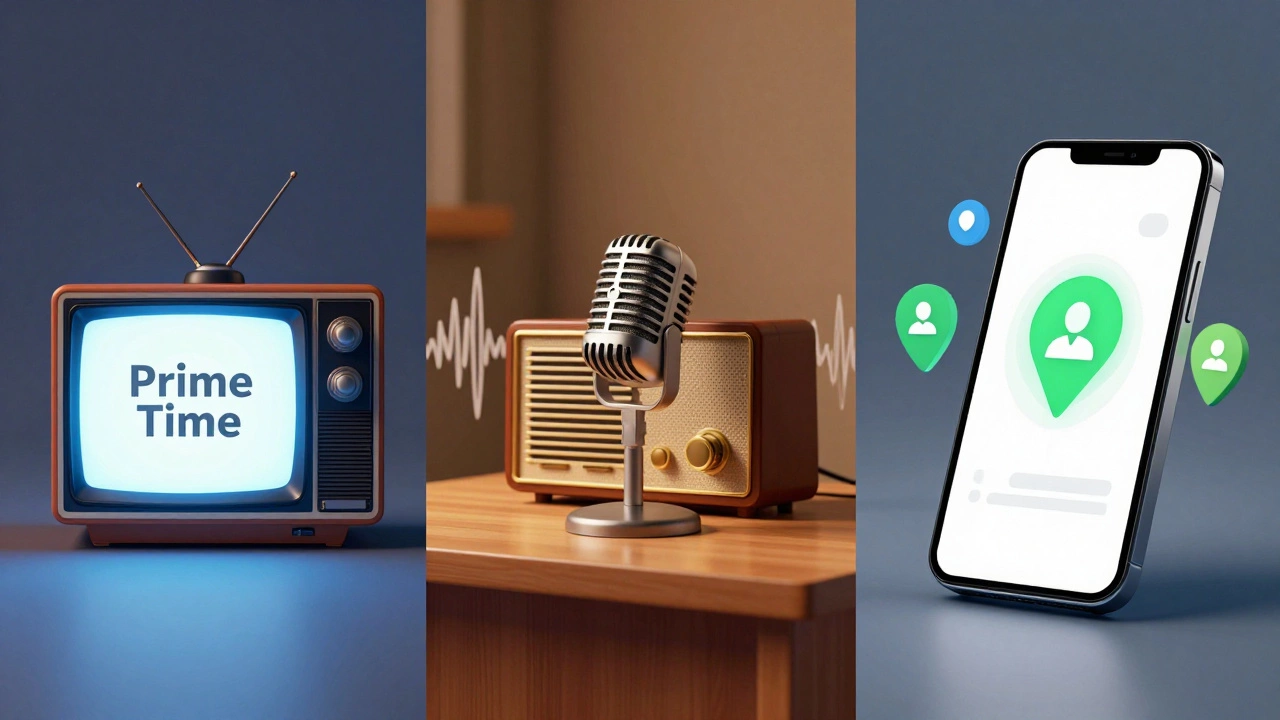
When people ask about "commercial costs," they usually picture television. But in the world of selling commercial property, your audience-investors, developers, and business owners-is fragmented across three main channels: Broadcast TV, Radio, and Digital Video (like YouTube or LinkedIn). Each has a completely different pricing model.
| Channel | Low End (Off-Peak/Niche) | High End (Prime-Time/Mass) | Best For Property Sales? |
|---|---|---|---|
| Local Radio | $500 - $1,500 | $3,000 - $6,000 | Yes, for local awareness |
| National TV | $10,000 - $25,000 | $80,000 - $150,000+ | No, too broad/expensive |
| Digital Video | $50 - $200 (CPM based) | $500+ (Targeted campaigns) | Yes, highly targetable |
Notice the gap? National TV is wildly expensive. If you’re selling a single warehouse in Manukau, paying $80,000 to reach 1 million people-including toddlers and retirees who will never buy industrial space-is bad math. That’s why understanding the pricing mechanics matters more than the headline numbers.
Why TV Ads Are So Expensive (And Often Wasteful)
Television advertising operates on a CPM model, which stands for Cost Per Mille, or cost per thousand impressions. In New Zealand, a standard CPM for free-to-air TV might sit around $20 to $40. But here’s the catch: you don’t pay per viewer; you pay for the potential audience of the program.
If you buy a slot during a top-rated drama on TVNZ or Prime, you are paying for scarcity. There are only so many seconds in a 30-minute episode. High demand drives up the price. For commercial property, this is often inefficient. You want investors, not general consumers. Unless you are launching a massive development project with residential components, traditional TV is usually a money pit for B2B sales.
However, if you do go the TV route, remember that the "spot" fee is just the start. You also need production costs. A professional 30-second video ad with drone shots, voiceover, and editing can easily run another $3,000 to $10,000. So your total investment doubles quickly.
Radio: The Underrated Local Powerhouse
While TV gets all the glory, radio remains a powerhouse for local commercial real estate. Why? Because listeners are often commuting-business owners driving to their sites, executives heading to meetings. They are in a "work mindset."
In Auckland, stations like ZM, The Edge, or even niche business-focused shows on RNZ offer different rates. A 30-second spot on a major commercial station during morning drive time (7 AM - 9 AM) might cost you $2,500 to $4,000. Off-peak slots drop significantly to under $1,000.
The beauty of radio is frequency. Instead of one $80,000 TV ad, you could run that same budget as 20 weeks of daily radio spots. Repetition builds trust. When a potential buyer hears your listing reference number three times a week, it sticks. Plus, radio production is cheaper. A simple script read by a professional voice actor costs a fraction of a video shoot.
Digital Video: Precision Targeting on a Budget
This is where the game has changed. Platforms like LinkedIn, YouTube, and even Facebook/Instagram allow you to target users by job title, industry, and interests. You aren’t paying for a 30-second "slot" in the traditional sense; you are paying for views (CPV) or clicks (CPC).
If you upload a 30-second video tour of your commercial property to YouTube and promote it via Google Ads, you might pay $0.10 to $0.50 per view. To get 10,000 targeted views, you’d spend roughly $1,000 to $5,000. Compare that to $25,000 for a similar reach on TV, and the difference is stark.
LinkedIn is pricier but more precise. You can target "Real Estate Investors" or "Property Developers" in the Auckland region. Costs here are higher per click, but the intent is stronger. You’re not just getting eyes; you’re getting decision-makers. For high-ticket commercial items, this precision often yields a better return on investment (ROI) than mass media.

Hidden Costs That Blow Up Your Budget
New sellers often focus only on the media buy-the act of purchasing the airtime. But there are hidden layers to consider:
- Production Fees: As mentioned, creating the ad costs money. Stock footage is cheap but generic. Custom drone footage of a large commercial site adds value but costs extra.
- Agency Markups: If you hire a media buying agency, expect them to charge a management fee of 10% to 15% on top of the media cost. They negotiate better rates, but you pay for their service.
- Tax and Compliance: In New Zealand, GST applies to most advertising services. Ensure your quotes include or exclude GST clearly.
- Frequency Load: One 30-second ad rarely works. You need repetition. Budget for at least 10-15 exposures to make an impact. Multiply your single-spot cost by 15.
How to Decide What’s Right for Your Property
So, what should you actually do? It depends on the asset.
If you are selling a small retail shop in a suburban strip mall, local radio and digital geo-targeting (showing ads to people within 5km) are your best friends. Keep the budget tight: $2,000 to $5,000 total.
If you are selling a multi-story office block or a large industrial park, you need credibility. Here, a mix of LinkedIn targeting (to reach corporate relocation managers) and perhaps a single high-quality TV spot during a business news segment (like Seven Sharp) might work. Budget: $15,000 to $40,000.
Avoid national prime-time TV unless you are a developer launching a brand new mixed-use precinct that needs public awareness, not just investor interest. For pure commercial transactions, specificity beats volume every time.
Is it worth buying a 30-second TV ad for a single commercial property?
Rarely. For a single unit, the cost ($10k-$50k+) is hard to justify against the narrow buyer pool. Use digital targeting instead to reach specific investors. TV is better for large-scale developments needing broad brand awareness.
What is the cheapest way to advertise a commercial property?
Digital social media ads (Facebook/Instagram/LinkedIn) are the most cost-effective. You can start with as little as $500 to test audiences. Local radio off-peak slots are also affordable, starting around $500 per spot.
Do I need to produce a custom video for a 30-second ad?
Not necessarily. For radio, you just need a script. For digital, a well-edited slideshow of high-quality photos with music can perform almost as well as a video. Save the custom drone shoot budget for premium listings where visual appeal is the main selling point.
How does media buying work for real estate agents?
Agents often have pre-negotiated rates with media houses due to volume buying. If you are working with an agent, ask if their marketing package includes these rates. If you are selling privately, you pay retail prices, which are higher.
Can I track the ROI of a radio or TV ad?
Yes, but indirectly. Use unique tracking methods: a dedicated phone number, a specific URL slug (e.g., yoursite.com/radio), or a unique listing code mentioned only in that ad. This lets you attribute inquiries directly to the medium.