How Long Is an Acre? Understanding Land Dimensions for Buyers
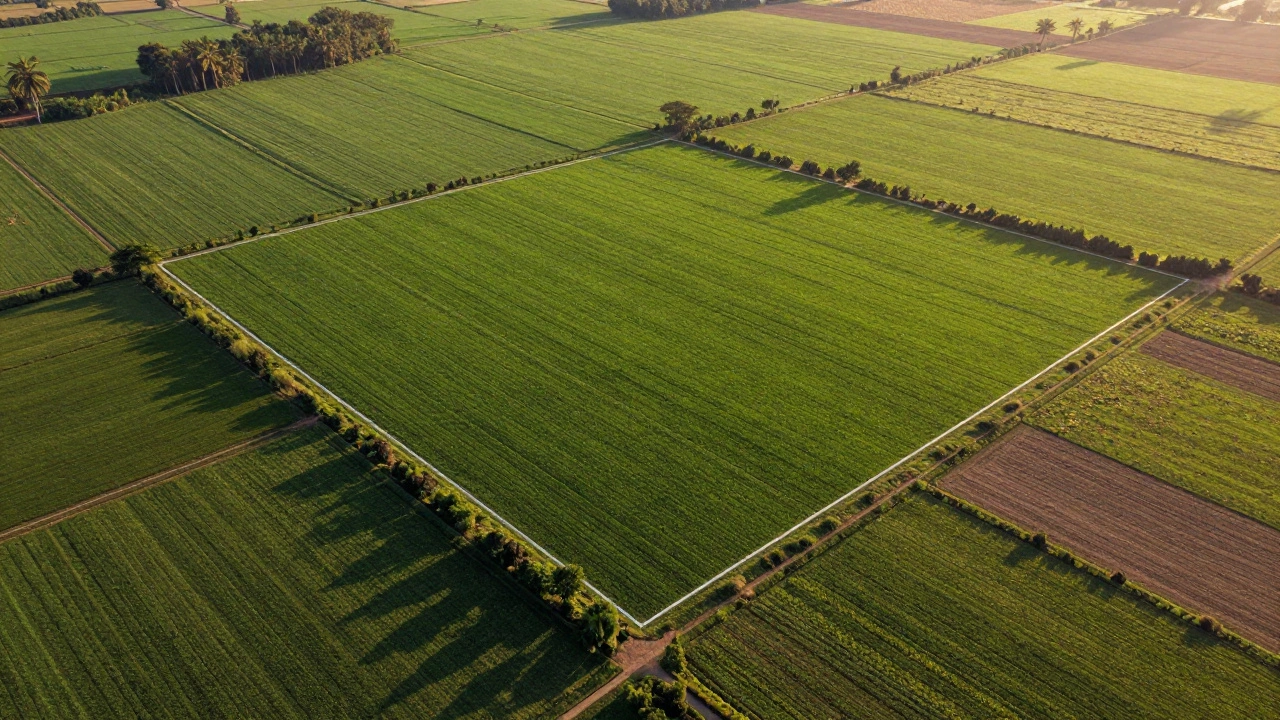
Acre Dimension Calculator
Calculate the length of your land based on its width to ensure it equals one acre (43,560 sq ft), or verify the total acreage of a specific plot.
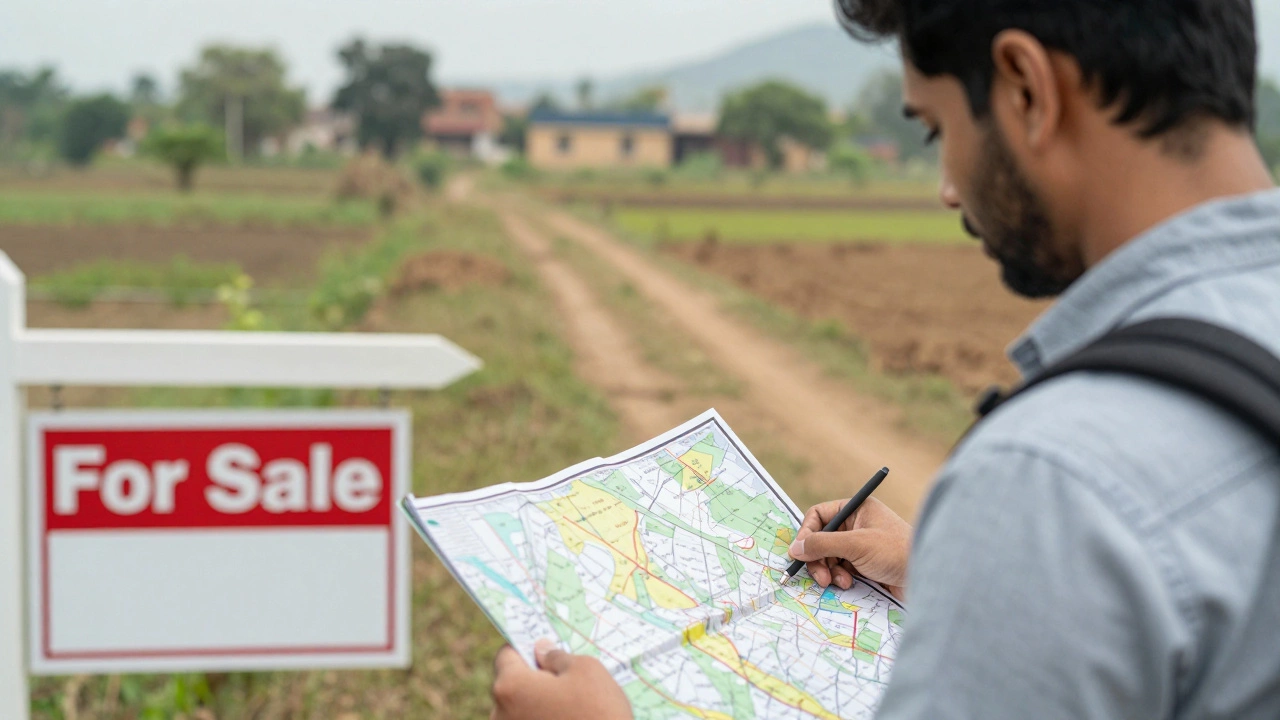
Picture this: you’re standing at the edge of a plot of land, looking at the 'For Sale' sign. The listing says it’s one acre. Great. But what does that actually look like? Is it long and skinny? Wide and short? Or maybe a perfect square?
If you’ve ever bought or sold land, you know that understanding acre dimensions is crucial. An acre isn’t just a number; it’s a specific amount of space that can be shaped in countless ways. Knowing how to visualize and calculate this space helps you avoid buying a plot that looks big on paper but doesn’t fit your plans.
The Basics: What Exactly Is an Acre?
Let’s clear up the confusion right away. An acre is a unit of area, not length. This means it measures how much ground is covered, not how far you have to walk from one side to the other. In the imperial system, which is still widely used for real estate in countries like the US and parts of the UK, one acre equals exactly 43,560 square feet.
Think of it like a pizza. Whether you cut the pizza into four large slices or eight small ones, the total amount of dough remains the same. Similarly, an acre can be any shape-a rectangle, a triangle, an irregular polygon-as long as the total area adds up to 43,560 square feet. If you’re dealing with metric systems, one acre is approximately 4,047 square meters or 0.4047 hectares.
Why does this distinction matter? Because when you hear someone ask "how long is an acre?" they are usually trying to understand the physical footprint of the property. They want to know if there’s enough room for a house, a garden, or perhaps a barn. Without knowing the width, you cannot determine the length. Area requires two dimensions: length multiplied by width.
Visualizing an Acre: Common Shapes and Sizes
To make sense of 43,560 square feet, let’s break it down into shapes you can easily picture. Most residential lots are rectangular, so we’ll start there.
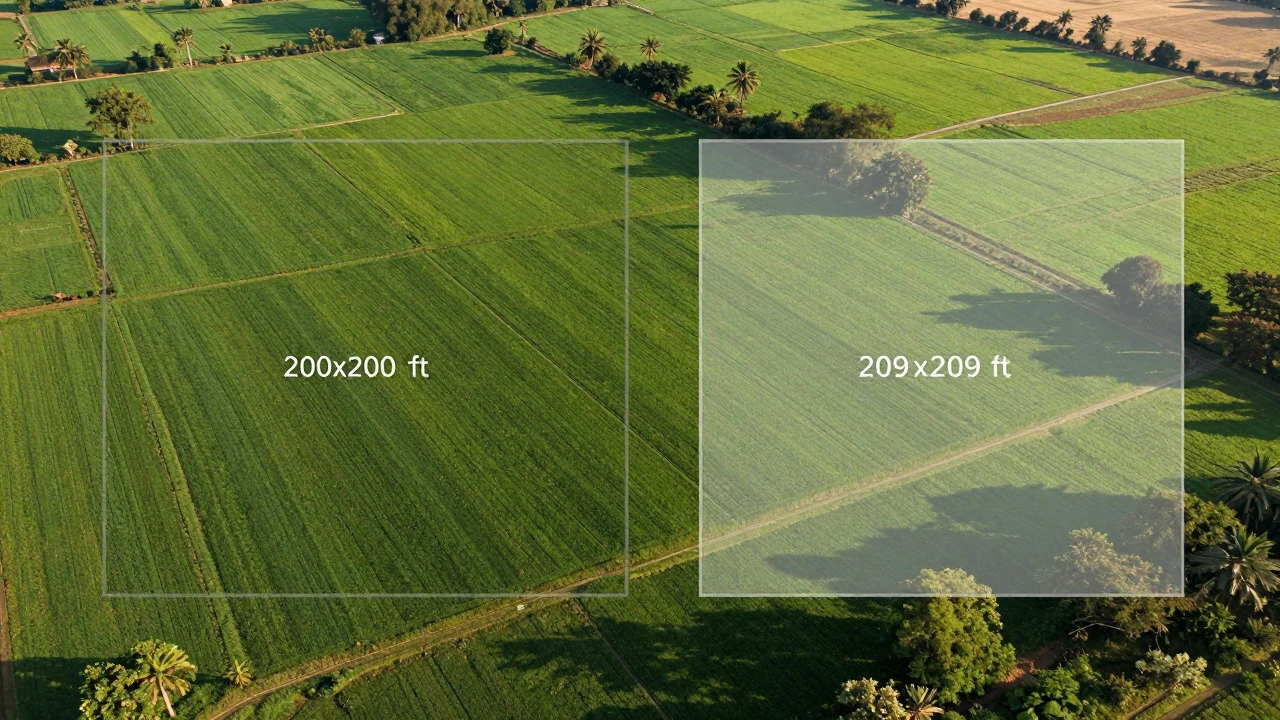
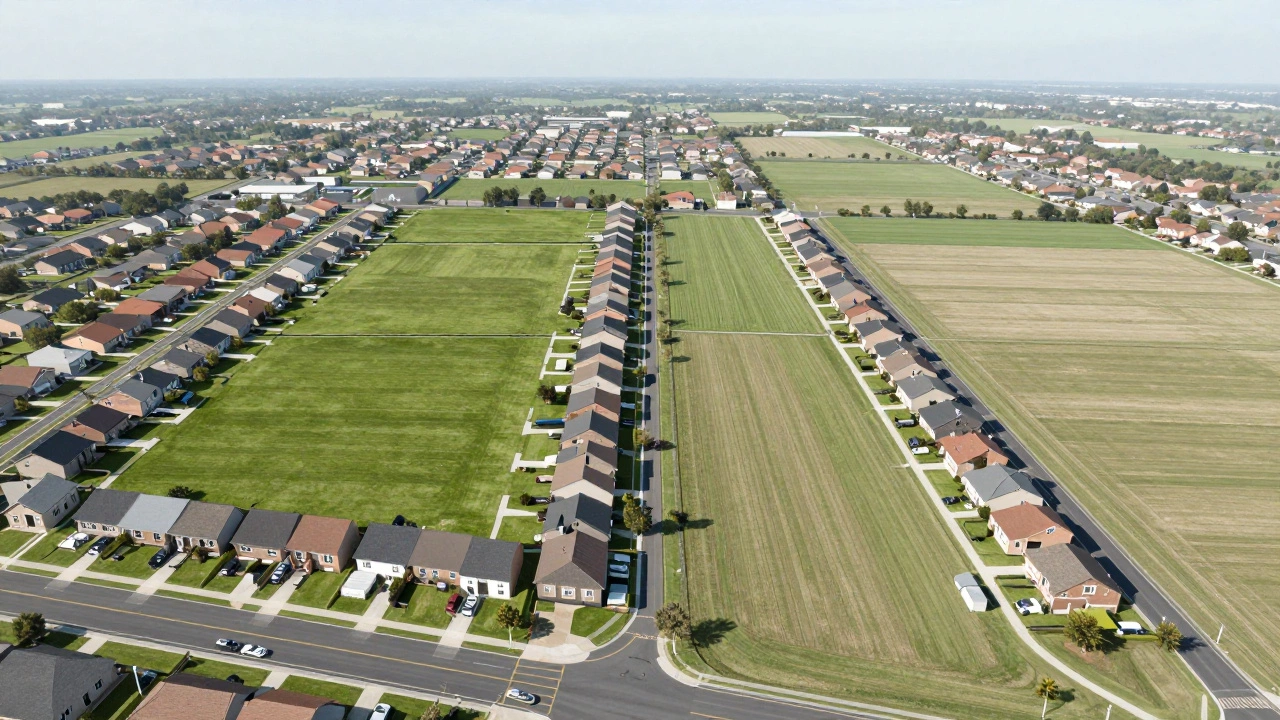
- The Perfect Square: If your acre were a perfect square, each side would measure about 208.71 feet. Imagine walking roughly 209 feet from your front door to your back fence, then turning left and walking another 209 feet to the side boundary. That’s your acre.
- The Standard Football Field: You’ve likely heard that an acre is close to the size of a football field. Technically, an American football field (including the end zones) is 360 by 160 feet, which equals 57,600 square feet-about 1.32 acres. However, the playing field alone (without end zones) is 300 by 160 feet, or 48,000 square feet. So, an acre is slightly smaller than a full football field. It’s roughly the size of the playing surface minus a bit more than a third.
- The Long Strip: Some rural properties are long and narrow. For example, a plot that is 100 feet wide would need to be 435.6 feet long to equal one acre. This is common in areas where land access is shared along a road.
- The Wide Lot: Conversely, a very wide lot might be 500 feet across. To maintain one acre, it would only need to be 87.12 feet deep. This type of layout is often seen in suburban developments where houses are set back from the street but extend far back toward neighbors.
Understanding these variations is key. A 100-foot-wide lot feels completely different from a 50-foot-wide lot, even if both contain exactly one acre. The former gives you a spacious front yard and easy access for vehicles, while the latter might feel cramped at the front but offer privacy at the rear.
| Width (Feet) | Length (Feet) | Total Area (Sq Ft) | Shape Description |
|---|---|---|---|
| 208.71 | 208.71 | 43,560 | Perfect Square |
| 100 | 435.6 | 43,560 | Narrow & Long |
| 50 | 871.2 | 43,560 | Very Narrow Strip |
| 500 | 87.12 | 43,560 | Wide & Shallow |
| 1,000 | 43.56 | 43,560 | Extremely Wide Ribbon |
Why Shape Matters More Than Size
When buying land, the shape of the acre often dictates its usability. Two plots with identical acreage can have vastly different values based on their configuration. Here’s why shape matters:
Buildable Area: Local zoning laws often require minimum setbacks from roads and property lines. A long, narrow lot might lose a significant portion of its usable space to these setbacks, leaving little room for construction. A square or wide lot typically offers more flexibility for placing a house, garage, or pool.
Access and Easements: Narrow strips of land often rely on shared driveways or easements through neighboring properties. This can lead to disputes over maintenance costs or usage rights. Wider lots usually provide direct road frontage, making them more desirable and easier to develop.
Privacy and Views: A wide, shallow lot might offer great views but less privacy from neighbors on either side. A deeper lot allows you to place structures further back, creating buffer zones that enhance seclusion. Think about where the sun rises and sets; a north-facing slope might be ideal for gardens, but only if the lot’s orientation supports it.
Landscape Design: Irregularly shaped acres can be challenging to landscape efficiently. You might end up with awkward corners that are hard to mow or plant. Regular shapes like rectangles or squares are easier to divide into functional zones for lawns, gardens, and patios.
Calculating Your Own Acreage
You don’t need to be a mathematician to verify land dimensions. If you have the measurements of a rectangular plot, calculating the area is straightforward. Multiply the length by the width to get the total square footage. Then, divide that number by 43,560 to find out how many acres you have.
For example, if a lot is 200 feet wide and 250 feet long:
- Multiply 200 by 250 = 50,000 square feet.
- Divide 50,000 by 43,560 = 1.14 acres.
What if the lot isn’t a rectangle? Many rural properties are trapezoidal or triangular. For a triangle, multiply the base by the height and divide by two. For irregular shapes, it’s best to use a surveyor’s map or digital tools. Many online calculators allow you to input multiple sides and angles to compute the area accurately.
Always double-check the numbers provided in the listing. Sellers sometimes round up, or older surveys might contain errors. A professional land survey is worth the investment before closing a deal. It confirms boundaries, identifies easements, and ensures you’re getting exactly what you paid for.
Acre vs. Hectare: Metric Conversions
In many parts of the world, including Europe, Australia, and New Zealand, land is measured in hectares rather than acres. One hectare equals 10,000 square meters, which is approximately 2.47 acres. If you’re comparing international listings, keep this conversion in mind.
Conversely, if you’re looking at US-based properties but think in metric terms, remember that one acre is roughly 4,047 square meters. This is slightly less than half a hectare. Visualizing a hectare might be easier for some: imagine a square with sides of 100 meters. That’s one hectare. An acre is a bit smaller, closer to a square with sides of 63.6 meters.
Understanding these conversions helps when researching global real estate trends or comparing investment opportunities across borders. It also clarifies discussions with international buyers or sellers who may not be familiar with imperial units.
Practical Tips for Land Buyers
Before signing on the dotted line, consider these practical steps to ensure the land meets your needs:
- Walk the Property: Don’t rely solely on maps. Walk the perimeter to feel the terrain. Note slopes, drainage patterns, and vegetation. Steep slopes can increase construction costs significantly.
- Check Zoning Regulations: Contact local planning departments to understand what you can build on the land. Residential, agricultural, and commercial zones have different rules regarding density, height, and usage.
- Verify Utilities: Determine if water, electricity, sewage, and internet services are available at the property line. Extending utilities to remote locations can be expensive.
- Assess Soil Quality: If you plan to farm or garden, get a soil test. Poor soil may require amendments or drainage improvements.
- Review Survey Maps: Ensure the survey matches the legal description in the deed. Discrepancies can lead to boundary disputes later.
Remember, an acre is just a starting point. The true value of the land lies in its potential. By understanding the dimensions, shape, and context of the property, you can make informed decisions that align with your goals, whether that’s building a dream home, starting a farm, or investing for future growth.
How many feet is an acre?
An acre is a measure of area, not length, so it doesn't have a single "length." However, one acre equals 43,560 square feet. If the acre is a perfect square, each side is approximately 208.71 feet long.
Is an acre bigger than a football field?
No, an acre is slightly smaller than a standard American football field including end zones. A full football field is about 1.32 acres. The playing field alone (without end zones) is about 0.87 acres.
How do I calculate the acreage of my land?
Multiply the length by the width in feet to get square footage, then divide by 43,560. For irregular shapes, use a surveyor's map or an online land area calculator that accepts multiple coordinates.
What is the difference between an acre and a hectare?
One hectare is larger than an acre. Specifically, one hectare equals approximately 2.47 acres, or 10,000 square meters. One acre is about 4,047 square meters.
Does the shape of an acre affect its value?
Yes, shape significantly affects usability and value. Square or wide lots are generally more valuable because they offer better buildable area, easier access, and fewer complications with setbacks compared to long, narrow strips.